Mostrando entradas con la etiqueta Guerra de Corea. Mostrar todas las entradas

CFP: "FRAMING SUSTAINABLE SECURITY ON THE KOREAN PENINSULA", NUMBER 5, KOREA EUROPE REVIEW


“Framing Sustainable Security on the Korean Peninsula”,

Number 5, Korea Europe Review


Guest editor: Francesca Frassineti 

The Korea Europe Review (KER) is an interdisciplinary platinum open access, peer-reviewed journal specialising in Korean Studies and encompassing the social sciences in a broad sense. While the primary focus is on the Korean peninsula, the journal’s perspective aims to transcend the traditional boundaries of Area Studies in its mission to integrate scholarship on Korea in a multidimensional context of regional as well as global social, cultural, and political discourse.


The Korea Europe Review is now inviting submission proposals for Issue 5 forthcoming in November 2023.

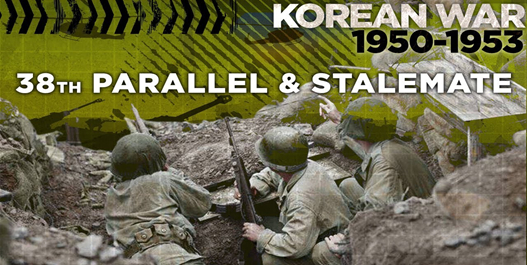
July 2023 will mark the seventieth anniversary of the Korean War Armistice Agreement. Still, the Korean peninsula continues to be one of the major security hotspots in East Asia, stuck in repeating action-reaction cycles. In addition to a high concentration of military assets for deterrence purposes within a geographically limited space and the ensuing increased escalation risk, broader competition between great powers has continually constrained and overridden local dynamics, which further complicates the already precarious status quo on the peninsula.

Beyond concerns over power imbalances across the conventional and nuclear domain, Koreans have also been faced with new, non-traditional security challenges. The regime of Kim Jong Un appears unwilling to ease isolation any time soon regardless of the international community warning of a looming humanitarian crisis in North Korea, further exacerbated by more frequent extreme weather events. Rather, Pyongyang has sought to take advantage of Washington’s tense relationship with Russia and China in the context of the war in Ukraine to progress towards a number of military development goals with relative impunity.

Against the backdrop of COVID-19 and fierce competition between the US and China, Seoul – on the other hand – has been progressively drawn into the middle of new fault lines, particularly with regards to the technological field. In the midst of global protectionist trends and efforts to securitise supply chains, the South Korean government has increasingly turned to new and emerging technologies to address the far-reaching implications of lower birth rates and a shrinking workforce. Although intensive digitalisation could push sustainable economic growth, it has already made South Korea a more vulnerable target of an ever-expanding and increasingly sophisticated spectrum of cyber operations that have been largely ascribed to North Korean state-sponsored actors. Besides using the cyber domain to carry out interference and espionage activities, the impacts of longstanding sanctions and COVID-19 induced blockades have led to a surge in Pyongyang’s alleged cyber activism aimed at generating illicit income. Faced with the specter of evolving and increasing cyberattacks, South Korea is forced to strengthen the resilience of critical infrastructure and take cooperation with the United States, European Union and NATO to the next level.

The issue titled “Framing Sustainable Security on the Korean Peninsula” seeks to approach the evolving security environment on and around the Korean peninsula from a holistic perspective, which encompasses politico-military, economic, environmental, and human factors. Besides the regional level, the aim is to shed light also on the challenges pertaining to the resiliency of local communities. Therefore, we are interested in original and unpublished studies that critically engage with the changes and ideas of security from traditional to non-traditional challenges in all fields related to Korea.

Potential topics may include, but are not limited to:

a) Human security (i.e. economic, food, health, environmental, personal, community, and political security)

b) Demographics with main focus on citizenship

c) The relationship between new media and subjective well-being and emotions (including cyber bullying, fake news, internet activism)

d) Economic security, economic coercion, technology, and innovation

e) South Korea’s contribution to regional and global security and cooperation with like-minded partners such as European and NATO countries (including overseas development assistance, health diplomacy, maritime security, territorial disputes)

f) Crisis management and contingency planning on the Korean peninsula (including alliance politics, defense industry, conventional and non-conventional military capabilities, strategic doctrine)


Please be sure to submit full-length articles no later than April 30, 2023. You are also welcome to discuss your ideas with our editors or equally send in an abstract prior to this date.

If you have any queries concerning your proposal as regards focus or thematic scope, please contact the issue’s guest editor Francesca Frassineti (University of Bologna and Ca’ Foscari University Venice) at francescafrassineti7@gmail.com. For all other inquiries as regards the publication process, author and stylistic guidelines, please contact editors@korea-europe-review.org

A note on article processing charges (APCs): At no stage of the publication process will The KER charge author fees for publication. All publication services rendered, e.g. peer review, editing, formatting etc., are completely free to our authors.

Please also note that in addition to calls with particular thematic foci, the Korea Europe Review also welcomes submissions on a continual year-round basis.


More Information:

Korea Europe Review (KER) ǀ ISSN: 2750-4832


Contact: editors@korea-europe-review.org

PERSPECTIVES ON CONTEMPORARY KOREA SUMMER INSTITUTE


Perspectives on Contemporary Korea

Summer Institute

Theme: The Global Korean War
Dates: June 25-July 1, 2023
Location: Ann Arbor Campus

Program Overview

The Nam Center for Korean Studies at the University of Michigan is announcing the inaugural Perspectives on Contemporary Korea Summer Institute, to be held in Ann Arbor from June 25-July 1, 2023. Graduate students at any level whose research concerns Korea are encouraged to apply. Preference will be given to students pursuing a doctoral degree. In this one-week, residential intensive program, students will participate in collaborative learning, collective thinking, and interdisciplinary agenda-setting around a key critical issue central to Korean Studies. Two leading scholars will be joining students in residence and directing in-person seminars for participants.

In the summer of 2023, the theme of the institute will be the Global Korean War. A formative event of the twentieth century, the Korean War was not a single war but a combination of several kinds of related conflicts: a civil war between mutually negating postcolonial political forces, a global conflict waged between major power blocs with competing visions of modernity, and, increasingly after 1950, a war fought between the American “superpower” and a fledgling revolutionary state of the People’s Republic of China. The Summer Institute will be devoted to exploring key issues in established and emerging scholarship on the Korean War. Particular attention will be paid to contextualizing classical perspectives in relation to successive waves of revisions enabled by the opening of previously unavailable archives on the one hand, and by the recognition of subjectivities and experiences hitherto unseen, unacknowledged, or marginalized, on the other.

This summer, the two scholars who will be joining the Summer Institute as faculty instructors are:

Heonik Kwon is a Senior Research Fellow in Social Science and Distinguished Research Professor of Social Anthropology at Trinity College, University of Cambridge. He is a Fellow of the British Academy, uniquely on the Academy’s three separate subject fields of Anthropology, Asian Studies and Modern History. Author of prizewinning books on the Vietnam War social history and on Asia's postcolonial Cold War experience (The Other Cold War, 2010), Kwon's other publications include North Korea: Beyond Charismatic Politics (2012), After the Korean War: An Intimate History (Cambridge, 2020), and Spirit Power: Politics and Religion in Korea's American Century (2022).

Steven Lee is Associate Professor of History and former chair of the international relations program at the University of British Columbia. His publications include Outposts of Empire: Korea, Vietnam and the Origins of the Cold War, 1949-1954 (1996), The Korean War (2001), and Transformations in Twentieth Century Korea, co-edited with Yunshik Chang (2006). He has coedited a volume of The Journal of American-East Asian Relations on the theme of the two Koreas in the 1950s (2017), and has written articles on the history of Korean refugees, Canada-Korean Relations, and the role of the UN in Korea. He is currently writing a global history of the twentieth century for Blackwell-Wiley.


Applications

All applications should be submitted using this form.

Interested students should prepare and submit the following documents, in addition to one confidential letter of recommendation from a faculty member from the institution where the student is currently enrolled, preferably the applicant’s advisor:
  1. A Letter of Intent of no more than two pages describing current scholarly interests and how participation in the Summer Institute would contribute to the applicant’s academic plans. The statement should include information about courses taken in relevant fields if any.
  2. A current curriculum vitae
  3. A sample of recent writing

Letters of recommendation should be submitted by the advisor in pdf format to ncks.applications@umich.edu with “SUMMER INSTITUTE - Letter of Recommendation” in the subject line.

The final deadline for all submissions is April 9, 2023 at 11:59 pm.

Admissions decisions will be announced within the month of April.


Tuition & Financial Aid

Tuition is waived for all participants in the institute. Lodging will be provided to participants, as well as a modest stipend for meals and incidental expenses, with the generous support of the Academy of Korean Studies.

Students are encouraged to seek funding from their home institutions for transportation to Ann Arbor.

The Summer Institute is supported by the Strategic Research Institute Program for Korean Studies of the Ministry of Education of the Republic of Korea and the Korean Studies Promotion Service at the Academy of Korean Studies (AKS-2021-SRI- 2200001).

CONFERENCIA CASA ASIA: LA GEOPOLÍTICA EN EL INDOPACÍFICO Y LA POSICIÓN DE COREA


La geopolítica en el Indopacífico y la posición de Corea,

Conferencia Casa Asia


La política exterior coreana ha dado un giro importante con el presidente Yon Seuk-yeol. Este giro se ha traducido en una mejora de las relaciones con Japón, una mayor aproximación a EEUU, sobre todo en el terreno de la seguridad, y una relación más matizada con China. En esta conferencia se tratarán los aspectos clave de la estrategia de este país asiático para el Indopacífico, con especial atención a la preocupación por la amenaza norcoreana y el protagonismo de las cuestiones de seguridad.

Presenta y modera:
Conferencia a cargo de:
  • María Castillo, embajadora de la Unión Europea para la República de Corea.

Más información:
  • Fecha: Jueves 16 de marzo de 18.00 h a 19.00 h CET
  • Precio: Actividad gratuita previa inscripción.

INTERNATIONAL CONFERENCE. UNITED NATIONS AND KOREAN WAR (1950-1953). POLITICS, WAR AND PEACE


International Conference:

United Nations and Korean War (1950-1953): Politics, War and Peace

21-24 October 2022, Pusan National University, Korea


After World War II, the geopolitical tension of East Asia, especially the Korean peninsula became critical. The beginning of the Cold War between two different ideologies of Communism and Democracy was eventually visualised through the military conflict of the Korean War (1950-1953). The United Nations (UN) dispatched soldiers from sixteen countries as well as medical support from six nations. Then, what is the relationship between the United Nations and the Korean War? Which countries were involved in the war? What were the political and international issues? How was the war seen to outsiders? What kind of grassroots narratives did the soldiers, families and Koreans have?

The aim of this conference is to explore the involvement of the United Nations for ‘the Forgotten War’ through the various case studies of individual, group, or nation. The theme can be analyzed in a multidisciplinary approach of history, politics, anthropology, sociology, war strategy, human movement, medicine, refugee, POWs, Busan studies, unification policy, education, and human rights. If you are interested or your current research is on the subject or relevant to the Korean War, we invite your paper for the international conference in 2022.


Proposed streams:
  1. Policy of the UN for Korean War: The involvement of the United Nations (UN) to the Korean War was significant for South Korea (positively) and North Korea (negatively). How was the decision made so early? Who was involved in the process? How was the policy implemented internationally?
  2. Human Movements, POWs and Refugees: The war directly impacted the relocation of the local people (6.3 million).The waralso caused many POWs and refugees. How was the geographical landscape of the human movements? What was the situation of refugees? Were the POWs treated fairly?
  3. War Strategy and Battles: The various war strategies were applied at the battlers of the Korean War between the army, navy (the marine corps) and air force of China, Russia, UN, North and South Koreas. How was the strategy changed? What was the turning point for each other? Which battles were significant? What about the condition of retrogression?
  4. Narratives of Victims and Casualties (Soldiers and families): The war generated many victims (death and wound) which affected the emotional and mental condition of family members. What was the story of individual involvement? How do they remember the East Asian war? What is the post-war life of soldiers? Do they have any story in relation with Korean people?
  5. Human Rights and Welfare (medicine, orphans, and education): Under the military situation of the Korea war, there were the various activities of international, public and NGO organisations in the sphere of human rights. How was the medical service provided? How were orphans managed? Was any activity of education continued?
  6. Theory and Method in Unification and Peace Process: Since the Korean War has been 70 years and remained as an unfinished war, what kind of theory or method can be adopted for the development of Korean Unification? How can the peace process take a place for the future of both Koreas?

Proposals:

Please send your abstract or panel proposals to David W. Kim (davidwj_kim@yahoo.co.uk) including the following information:
  • Paper title
  • Nominated stream
  • Name and affiliation
  • Contact details (email)
  • Abstract of 150-200 words
  • Biography of 80 words highlighting teaching and research interests and publications (3-4 title and year only).
Proposals for panels of 3 or 4 papers must include the above information for all papers and a brief description of the panel itself of 100 words.


Key dates:
  • Proposal deadline: 15 June 2022
  • Notification: 30 July 2022
  • Registrations open: 05 August 2022
  • Registrations close: 30 August 2022
  • Conference: 21-24 October 2022

Registration fees:
  • Full-time scholar: $300
  • Student/ part-time and unwaged scholar/ audience: $250
  • Local Korean scholar: $200
  • Publishers and Bookshops: $400
Registration includes participation in all conference sessions, lunch, morning tea and afternoon tea on each day, conference dinner, registration pack, and post-conference tour (a half or one day). Publisher registration includes, in addition, a display desk, an opportunity to address conference delegates, and your logo on the conference program front page.


Bursary and Award:

There will be limited burary for some accepted doctoral candidates and early career researchers ($100-$300 each) as well as award for two best papers ($500 each). The bursary and award will be given away after conference.


Post-conference Publication:

The selected papers (in a blook volume) will be published by the Cambridge Scholars Publishing in UK.


Conference Committee:

(Chair) Asso. Prof. David William Kim (Australian National University and Kookmin University, Seoul)

(Co-Chair) Prof. Kiseob Kim (Director, Institute for Korean Unification, Pusan National University)

Research Prof. Jihyun Kim (Institute for Korean Unification, Pusan National University)


Contact:

Please address all inquiries to Dr. David W. Kim: davidwj_kim@yahoo.co.uk

CFP: UNITED NATIONS AND KOREAN WAR (1950-1953): POLITICS, WAR AND PEACE.


United Nations and Korean War (1950-1953):

Politics, War and Peace


After World War II, the geopolitical tension of East Asia, especially the Korean peninsula became critical. The beginning of the Cold War between two different ideologies of Communism and Democracy was eventually visualised through the military conflict of the Korean War (1950-1953). The United Nations (UN) dispatched soldiers from sixteen countries as well as medical support from six nations. Then, what is the relationship between the United Nations and the Korean War? Which countries were involved in the war? What were the political and international issues? How was the war seen to outsiders? What kind of grassroots narratives did the soldiers, families and Koreans have?

The aim of this conference is to explore the involvement of the United Nations for ‘the Forgotten War’ through the various case studies of individual, group, or nation. The theme can be analyzed in a multidisciplinary approach of history, politics, anthropology, sociology, war strategy, human movement, medicine, refugee, POWs, Busan studies, unification policy, education, and human rights. If you are interested or your current research is on the subject or relevant to the Korean War, we invite your paper for the international conference in 2021.


Proposed streams:
  1. Policy of the UN for Korean War: The involvement of the United Nations (UN) to the Korean War was significant for South Korea (positively) and North Korea (negatively). How was the decision made so early? Who was involved in the process? How was the policy implemented internationally?
  2. Human Movements, POWs and Refugees: The war directly impacted the relocation of the local people (6.3 million). The war also caused many POWs and refugees. How was the geographical landscape of the human movements? What was the situation of refugees? Were the POWs treated fairly?
  3. War Strategy and Battles: The various war strategies were applied at the battlers of the Korean War between the army, navy (the marine corps) and air force of China, Russia, UN, North and South Koreas. How was the strategy changed? What was the turning point for each other? Which battles were significant? What about the condition of retrogression?
  4. Narratives of Victims and Casualties (Soldiers and families): The war generated many victims (death and wound) which affected the emotional and mental condition of family members. What was the story of individual involvement? How do they remember the East Asian war? What is the post-war life of soldiers? Do they have any story in relation to Korean people?   
  5. Human Rights and Welfare (medicine, orphans, and education): Under the military situation of the Korean war, there were various activities of international, public and NGO organisations in the sphere of human rights. How was the medical service provided? How were orphans managed? Was any activity of education continued?
  6. Theory and Method in Unification and Peace Process: Since the Korean War has been 70 years and remained as an unfinished war, what kind of theory or method can be adopted for the development of Korean Unification? How can the peace process take a place for the future of both Koreas?

Proposals:

Please send your abstract or panel proposals to David W. Kim (davidwj_kim@yahoo.co.uk) including the following information:
  1. Paper title
  2. Nominated stream
  3. Name and affiliation
  4. Contact details (email)
  5. Abstract of 150-200 words
  6. Biography of 80 words highlighting teaching and research interests and publications (3-4 title and year only).
Proposals for panels of 3 or 4 papers must include the above information for all papers and a brief description of the panel itself of 100 words.


Key dates:

Proposal deadline: 15 June 2021

Notification: 30 June 2021

Registrations open: 14 July 2021

Registrations close: 10 August 2021

Conference: 22-24 October 2021


Registration fees:
  • Full-time scholar: $250
  • Student/ part-time and unwaged scholar/ audience: $200
  • Local Korean scholar: $200
  • Publishers: $500

Registration includes participation in all conference sessions, lunch, morning tea and afternoon tea on each day, conference dinner, registration pack, and post-conference tour. Publisher registration includes, in addition, a display desk, an opportunity to address conference delegates, and your logo on the conference program front page.

There will be a limited bursary for some accepted doctoral candidates and early career researchers ($100-$300 each) as well as the award for two best papers ($500 each). The bursary and award will be given away after the conference.

In addition, the selected papers (in a book volume) will be published in the UK or Europe.


Contact Info:

Conference Committee:    

(Chair) Asso. Prof. David William Kim (Australian National University and Kookmin University, Seoul)

(Co-Chair) Prof./Directer Kiseob Kim (Institute for Korean Unification, Pusan National University)


Contact:

Please address all inquiries to Dr David W.Kim: davidwj_kim@yahoo.co.uk

Contact Email: davidwj_kim@yahoo.co.uk