Mostrando entradas con la etiqueta paz. Mostrar todas las entradas

CFP: ENGAGED BUDDHISM FOR AN ENGULFED WORLD; NEW PERSPECTIVES ON HUMANISTIC BUDDHISM


International Conference Engaged Buddhism for an Engulfed World:

New Perspectives on Humanistic Buddhism


The organizing committee for the international conference on “Engaged Buddhism for an Engulfed World: New Perspectives on Humanistic Buddhism” cordially invites the submission of related papers. This conference is sponsored by the Glorisun Charity Foundation in Hong Kong, administered by the Glorisun Global Network for Buddhist Studies and FROGBEAR at the University of British Columbia, and hosted by the University of Hong Kong. It will take place from August 9 to August 12, 2023 in Hong Kong.

Starting from the late 19th century, anti-religious movements such as ‘school-building on monastic properties’ 廟產興學 and the introduction of Western religions had posed an unprecedented crisis for Chinese Buddhism. This crisis weakened the economical foundation of the monasteries and even stripped some monasteries of their properties and possessions, making their normal functioning hard to persist. The traditional status of monastics was also severely challenged, forcing many monastics to return to lay life. Meanwhile, local religious activities centering around the monasteries also came to be seriously limited, while the overall development of Buddhism halted and even retrograded.

However, crisis also spurred reforms in Buddhist education, leading to the creation of many modern Buddhist colleges. In response to the crisis, some traditional Buddhist schools, such as Tiantai and Pure Land, also experienced renaissance. But perhaps the most notable outcome emerging from this crisis is the movement of Engaged or Humanistic Buddhism (Renjian Fojiao 人間佛教) led by Master Taixu 太虛 (1890-1947) which underpinned the renaissance of Chinese Buddhism in the 20th century.

Engaged Buddhism advocates the application of Buddhist philosophy in everyday life and the use of Buddhist practices for the sake of the betterment of oneself and the society. It promotes the sense of engagement and responsibility for the world and has led more and more Chinese Buddhists to regard the welfare of the society, and to contribute to charity, education, environment protection, and public health, among other social causes.

Engaged Buddhism also represents a modernized religious movement. It embraces modern values such as gender equality, diversity, individual freedom, and scientific and technological outlook; and is thus uniquely suitable for facilitating the dialogue between the Eastern and Western religions.

Buddhism itself promotes multiculturalism. Since its origin in India, it had taken up abode in many cultural and geographical areas in Central, East and Southeast Asia; and today, its influences continue reaching all around the world. Its successful transplantation in so many diverse cultures is indebted to its spirit of inclusivity. Buddhism is not hostile to other forms of thinking and in fact encourages its followers to respect the cultural and ideological diversity. This inclusive spirit revealed to be an advantage in the propagation of Buddhism on foreign soils. Secondly, Buddhism is highly adaptable, constantly letting itself be modified by host cultures. Moreover, Buddhist missionaries are often highly cultured individuals who possess the precious ability to communicate cross-culturally which is a quality strengthening the international appeal of Buddhism.

If we say Engaged Buddhism was birthed passively by the socio-historical circumstance at the time, then we must ask whether it could play a more active role in today’s world that is threatened by a reverse trend of globalization and the increasing hostility between some major cultures and states. It is thus worthwhile for scholars to study whether and how Engaged Buddhism could wield its cross-cultural capacity to contribute to the world peace and cooperation. For these reasons, we propose, though not exclusively, the following themes for discussion:
  • Engaged Buddhism and history;
  • Engaged Buddhism and regional studies (mainland China, Taiwan, Hong Kong, Macao, Southeast Asia);
  • Engaged Buddhism: notable cases;
  • Engaged Buddhism: notable figures;
  • Engaged Buddhism and modernization;
  • Engaged Buddhism and globalization;
  • Engaged Buddhism and cross-cultural transmission;
  • Engaged Buddhism: its prospect.
The organizing committee welcomes all paper proposals related to this conference theme. All conference-related costs, including local transportation, meals and accommodation during the conference period, will be covered by the conference organizers, who—depending on availability of funding—may also provide a travel subsidy to selected panellists who are in need of funding. Please email proposals and CVs to frogbear.project@ubc.ca by April 15, 2023.

A conference volume will collect all the papers in English, plus English translations of several papers written in languages other than English; a volume in Chinese will include Chinese versions for all papers not written in Chinese in addition to those papers contributed by our colleagues based in China. Only scholars who are confident in finishing their draft papers by mid-July and publishable papers by mid-November of 2023 are encouraged to apply.

This conference is planned as part of our annual International and Intensive Program on Buddhism (details TBA).

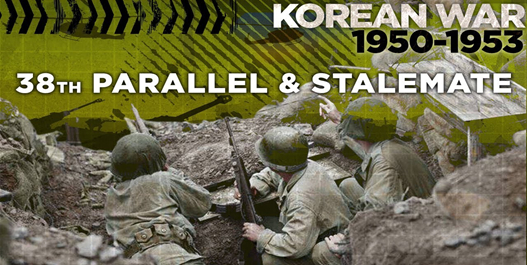
INTERNATIONAL CONFERENCE. UNITED NATIONS AND KOREAN WAR (1950-1953). POLITICS, WAR AND PEACE


International Conference:

United Nations and Korean War (1950-1953): Politics, War and Peace

21-24 October 2022, Pusan National University, Korea


After World War II, the geopolitical tension of East Asia, especially the Korean peninsula became critical. The beginning of the Cold War between two different ideologies of Communism and Democracy was eventually visualised through the military conflict of the Korean War (1950-1953). The United Nations (UN) dispatched soldiers from sixteen countries as well as medical support from six nations. Then, what is the relationship between the United Nations and the Korean War? Which countries were involved in the war? What were the political and international issues? How was the war seen to outsiders? What kind of grassroots narratives did the soldiers, families and Koreans have?

The aim of this conference is to explore the involvement of the United Nations for ‘the Forgotten War’ through the various case studies of individual, group, or nation. The theme can be analyzed in a multidisciplinary approach of history, politics, anthropology, sociology, war strategy, human movement, medicine, refugee, POWs, Busan studies, unification policy, education, and human rights. If you are interested or your current research is on the subject or relevant to the Korean War, we invite your paper for the international conference in 2022.


Proposed streams:
  1. Policy of the UN for Korean War: The involvement of the United Nations (UN) to the Korean War was significant for South Korea (positively) and North Korea (negatively). How was the decision made so early? Who was involved in the process? How was the policy implemented internationally?
  2. Human Movements, POWs and Refugees: The war directly impacted the relocation of the local people (6.3 million).The waralso caused many POWs and refugees. How was the geographical landscape of the human movements? What was the situation of refugees? Were the POWs treated fairly?
  3. War Strategy and Battles: The various war strategies were applied at the battlers of the Korean War between the army, navy (the marine corps) and air force of China, Russia, UN, North and South Koreas. How was the strategy changed? What was the turning point for each other? Which battles were significant? What about the condition of retrogression?
  4. Narratives of Victims and Casualties (Soldiers and families): The war generated many victims (death and wound) which affected the emotional and mental condition of family members. What was the story of individual involvement? How do they remember the East Asian war? What is the post-war life of soldiers? Do they have any story in relation with Korean people?
  5. Human Rights and Welfare (medicine, orphans, and education): Under the military situation of the Korea war, there were the various activities of international, public and NGO organisations in the sphere of human rights. How was the medical service provided? How were orphans managed? Was any activity of education continued?
  6. Theory and Method in Unification and Peace Process: Since the Korean War has been 70 years and remained as an unfinished war, what kind of theory or method can be adopted for the development of Korean Unification? How can the peace process take a place for the future of both Koreas?

Proposals:

Please send your abstract or panel proposals to David W. Kim (davidwj_kim@yahoo.co.uk) including the following information:
  • Paper title
  • Nominated stream
  • Name and affiliation
  • Contact details (email)
  • Abstract of 150-200 words
  • Biography of 80 words highlighting teaching and research interests and publications (3-4 title and year only).
Proposals for panels of 3 or 4 papers must include the above information for all papers and a brief description of the panel itself of 100 words.


Key dates:
  • Proposal deadline: 15 June 2022
  • Notification: 30 July 2022
  • Registrations open: 05 August 2022
  • Registrations close: 30 August 2022
  • Conference: 21-24 October 2022

Registration fees:
  • Full-time scholar: $300
  • Student/ part-time and unwaged scholar/ audience: $250
  • Local Korean scholar: $200
  • Publishers and Bookshops: $400
Registration includes participation in all conference sessions, lunch, morning tea and afternoon tea on each day, conference dinner, registration pack, and post-conference tour (a half or one day). Publisher registration includes, in addition, a display desk, an opportunity to address conference delegates, and your logo on the conference program front page.


Bursary and Award:

There will be limited burary for some accepted doctoral candidates and early career researchers ($100-$300 each) as well as award for two best papers ($500 each). The bursary and award will be given away after conference.


Post-conference Publication:

The selected papers (in a blook volume) will be published by the Cambridge Scholars Publishing in UK.


Conference Committee:

(Chair) Asso. Prof. David William Kim (Australian National University and Kookmin University, Seoul)

(Co-Chair) Prof. Kiseob Kim (Director, Institute for Korean Unification, Pusan National University)

Research Prof. Jihyun Kim (Institute for Korean Unification, Pusan National University)


Contact:

Please address all inquiries to Dr. David W. Kim: davidwj_kim@yahoo.co.uk

CFP: PEACE & THE MANAGEMENT OF RELIGIOUS AND ETHNIC PLURALISM IN ASIA


Call for Chapters for a Collective Publication:

Peace & the Management of Religious and Ethnic Pluralism in Asia


In his quest to elevate his fields of expression, mankind adopts various paths that reflect his visions and his philosophy and through which he strives to give distinctive and specific characteristics to his movement in time/history and place/geography. These characteristics are essentially intertwined with the roles associated with individuals, societies and nations and the human relations between and among them. These relations are renewed and transformed based on the shifts in the collective needs and interests during different stages of civilizational advancement.

Our contemporary world is witnessing developments and transformations that express a new phase of human history, a phase which reformulates many of the statements and visions that founded human actions and experiences in the arenas of cultural, religious, economic, political, and strategic advancements. Every civilization and nation seek to be in a position of influence in one or some of these arenas, or all of them. For this purpose, each nation mobilizes its capacities, capabilities, and heritage, so that it does not find itself on the sidelines of contemporary transformations.

In fact, our contemporary world offers new opportunities for interaction between and among civilizations and nations which adds a new brick in the common human edifice. But at the same time, some developments and events in our contemporary reality have unfortunately led to the emergence of conflict and negative competition. The rising conflicts may destroy the lasting efforts that worked to build the common human edifice of many generations across multiple centuries.

Pluralism and diversity are a fixed and an undeniable religious, cultural, and ethnic reality in our world. For as long as this is the case, it is the ethical responsibility of members of different religions and of different cultures and races, to build creative ways in managing this diversity, in order to prevent or resolve conflicts of all kinds. When observing global geography in general and the geography of Muslim settlement, we find elements of commonalities between Muslim communities and others. These commonalities differ in their form and content depending on the historical and civilizational circumstances of each community and the cross-cultural impact and influence among them.

The Asian continent constitutes the most rich and diverse geographical area for Muslims in view of the global demographic map, and this geographical area is a key determinant for measuring global power balances and their future developments. This is particularly relevant with the multidimensional rise of China and India on cultural, economic, political, and strategic grounds. In other words, world peace depends greatly on stability in Asia whereas the possibilities of cooperation and/or conflict within the continent can easily migrate to other regions of the world, whether in Africa, the Arab region, Europe, or the American continent.

The current realities of Muslims and their future in Asia cannot be separated from the historical formation of other nations and other religions and civilizations in the region, such as Buddhism, Confucianism, Hinduism, Christianity, and others. Given the diversity of racial and linguistic identities of Muslims in the region, it is only natural that Muslims hold many commonalities with people of similar race -albeit being of different religious backgrounds- since Muslims form a big part of the ethnic map of neighboring religions and philosophies. For example, across the tribes of Central Asia, Tibet, and China there is a significant number of followers of the Buddhist religion and within the same community many follow the religion of Islam, Confucianism or Hinduism. The different historical and geographical contexts in which communities in Asia have developed has also caused differentiation lines within followers of the same religion. This differentiation and division can also be explained in terms of the efforts of different ethnic and religious groups to achieve their water security, food security, and energy security.

Religious considerations are not the main or the only factor in the outbreak of conflicts, whether in Asia or other regions of the world, but religion is sometimes used to achieve other goals. Therefore, it is necessary to search for the specifics of each crisis in Asia and to look at it in its political, socio-historical, and socio-economic contexts, with its impact within and beyond the countries of conflict.

Within this framing vision, Al-Hokama Center for Peace Research launched the project of “Studies on Civil Peace in Asia” with the aim of tracing the roots of erupting or expected crises in Asia. The program is foregrounded in an approach that aims to build a theoretical vision about the religious and socio-economic transformations and interactions that are either a cause of conflicts or the basis for peace and coexistence in Asia. The program takes into account the factors of time /history and place / geography in tracking these transformations, not only in order to understand the ongoing conflicts in the regions of Asia, but also to monitor and foresee the factors that may lead to the emergence of new conflicts in the future.

The research axe “Studies on Civil Peace in Asia” within the Asian Studies Project seeks to publish a collective publication titled: Peace & the Management of Religious and Ethnic Pluralism in Asia. The book project stems from a philosophy which centers the material and moral dimensions of human survival to prevent violence, aggression, and the human right to life. In other words, dismissing these dimensions inevitably leads to the spread of fear and then unrest and wars. The moral and immaterial existence of the human being is expressed through the cultural, religious, and symbolic affiliations of societies, but these affiliations are in turn subject to a transformation process. These transformations either occur for internal reasons such as the emergence of new interpretations or fundamentals of a single unified identity, or for external reasons, such as cultural clashes or cross-cultural exchanges with other identities. In both cases the constant remains: diversity and pluralism are a prominent feature of human life throughout history, and as long as this truth is absolute and cannot be overridden, it is the ethical responsibility of mankind to preserve this diversity, to wisely manage this pluralism, to ensure a safe and peaceful environment for the exchange among all the cultural, religious and civilizational components of human societies.

The collective publication proposes several themes through which it seeks to study the experiences and challenges of civil peace in different regions of Asia, namely:

I. Indian Subcontinent

1) Peaceful coexistence and religious pluralism in India.

2) Religious and ethnic pluralism in India: Keys to understanding the formation of the self.

3) A Sociological Approach to Islam in Indian Consciousness.

4) Peaceful coexistence and religious and ethnic pluralism in Pakistan.

5) Rebuilding civil peace in a plural society: the case of Sri Lanka.


II. Chinese Region

1) Managing religious and ethnic pluralism in China.

2) China and Islam: Analysis of a specific vision.

3) The religious influence of China in Asia.


III. Central Asia

1) Peace and Religious and Ethnic Diversity in Central Asia.

2) Ethnic and religious pluralism in Uzbekistan.

3) Ethnic and religious diversity in Tajikistan.

4) Ethnic and religious diversity in Afghanistan.

5) Ethnic and religious diversity in Kyrgyzstan.

6) Ethnic and religious diversity in Turkmenistan.


IV. Southeast Asian Region

1) Religious and Ethnic Coexistence in Southeast Asia: The case of Cambodia.

2) The role of Muslims in peaceful coexistence in Thailand.

3) Religious and Ethnic Diversity in Thailand: Possibilities and Challenges.

4) Religious and Ethnic Coexistence in Myanmar: Obstacles and Opportunities.

5) The prospect of religious and ethnic coexistence in the Philippines.

6) Peaceful Coexistence in Singapore: Analysis of Diversity Management

7) The Indonesian Experience in Managing Religious and Ethnic Pluralism.

8) Civil peace in Malaysia and Religious and Ethnic Pluralism.


V. Asia-Pacific Region

1) Interaction of Japanese Religious Consciousness and Islam

2) Managing Religious Pluralism in South Korea.

3) Societal vision of Islam in Korea.

4) Islam and South Korean Elites.

5) The Australian Vision on Religious and Ethnic Pluralism in Asia.

6) The New Zealand Vision on Religious and Ethnic Pluralism in Asia.


VI. A Comparative Approach to the Prospects of Civil Peace in Asia

1) Policies For Managing Diversity in Ethnically and Religiously Diverse Asian Societies

2) Policies for the Inclusion of Ethnic Groups in Decision-Making

3) International Legal Standards for Managing Diversity and Recognition of Pluralism

4) The Roles of Local and International Actors in Diversity Management: A Reading of Asian Experiences


1. Al-Hokama Center for Peace Research is inviting prospective participants to submit research proposals to Asian.st@alhokama.com according to the following requirements:
  • Interested participants are invited to submit research proposals (approx. 700 words) and a short biography, accompanied by an academic CV, in English or Arabic or French, no later than 10th of May 2022, with acceptance replies within three weeks thereafter.
  • All research proposals should include the following sections: the research question(s), a basic hypothesis, the methodological and theoretical frameworks, and approaches/results, with a list of references.
  • The paper should bear the following: Title of the Paper, Author(s) Details, Abstract, Keywords, Introduction, Discussion, Conclusion, References.
  • Papers can be submitted in Arabic or English or French.
  • Researchers whose proposals were approved by the scientific committee should send their complete papers (6000-10000 words), no later than 15 September 2022.
  • A specialized organising committee will review the research, and the committee is obligated to inform the researcher of the decision to approve, decline or request any amendment to the paper no later than 30 September 2022.
2. Selected papers will receive a financial award after publishing, authors of excellent papers will be invited to attend the International Conference that will be organized in November 2022 in Rabat (Morocco) to present their papers. Al-Hokama Center  will cover all expenses related to travel, lodgings, and transportation of the selected participants during the conference.


For any further information, please visit our website or contact the Coordinator of Asian Studies Program (Hamza Mrabett) at this email: H.mrabett@alhokama.com.


Contact Info:

(Hamza Mrabett) Asian Studies Program Coordinator at ALHOKAMA center for peace research

Contact Email: asian.st@alhokama.com

CFP: THE 3RD ANNUAL MEETING OF THE EAST ASIAN SOCIETY FOR THE SCIENTIFIC STUDY OF RELIGION (EASSSR)


The 3rd Annual Meeting of the East Asian Society for the Scientific Study of Religion (EASSSR)  Religion and Peace in East Asia: Reconsideration of Roles of Religion in the Post-Secular Age
July 23 to 25, 2020. Jeju National University, Republic of Korea


Religion has always played an important central role in promoting hope and vision for peace. Each religion present in both East and West emphasizes a religious importance of spiritual and ethical life based on justice, peace, brotherhood, and mercy. Religious beliefs and practices for the pursuit of a just and peaceful world should be considered more expansively at the political, social and national level as well as at the individual level, and further at the level of the entire humanity. The complex roles of religions in war and peace in modern times, especially in East Asian societies, should be examined more carefully and systematically. With the global spread of political nationalism and economic protectionism, China, Japan, Korea, and other societies all face an internal conflict triggered by extreme oppositions and tensions within the established social order, while increasing the possibility of a clash between nations in the area. In this circumstance, both scholars of religion and peace need to pay more attention to social roles of religion through reflecting a reconsideration of the revival of religion and, more specifically, the public roles of religion in the ‘Post-secular Age’ which needs a multi-layered dialogue beyond “interreligious dialogue” ever pursued. Finding the spirit of religious tolerance and harmony inherent in East Asian religious traditions as well as religions introduced in modern times, the papers based on various perspectives are welcome. In particular, priority will be given to the papers that include the following topics and interests without any limitation to the geographical and cultural context and boundaries of East Asia.
  • Socio-historical studies on religion as an agent of peace or conflict
  • Relationship between religion and peace in the (post-) secular age.
  • Comparison of Eastern with Western religions in the quest for peace.
  • Case studies of peace building in East Asia.
  • Thoughts and practices of peace in traditional religions and/or newly-risen religions in East Asia.
  • Case studies of the transformations (or appropriation) of traditional religions.

However, any topic in the social scientific study of religion is welcome. In particular, any proposals of closed sessions organized by three or four papers are welcome, focusing on different perspectives within a same religious tradition. In case of individual papers we will arrange them into each session in accordance with their topics.

Abstract Submission

Paper Abstracts should be submitted by March 31, 2020:


For more information about any fees of membership, registration, and accommodation, please visit the website https://www.easssr.org or send e-mail by easssr2020@gmail.com