Mostrando entradas con la etiqueta call for papers. Mostrar todas las entradas

CFP: COMPARATIVE STUDY OF VILLAGE DEVELOPMENT EAST ASIAN EXPERIENCES


East Asian Development Forum 5th International Symposium on

Comparative Study of Village Development: East Asian Experiences


In order to promote academic exchanges among scholars from China, Japan, Korea and other countries engaged in the study of urban and rural social development, we hold the 5th International Symposium on Comparative Study of Village Development. The theme of this conference is "East Asian Experience of Urban-Rural Integrated Development", which is scheduled to be held by The Academy of Korean Studies in Korea, on August 23-25, 2024.

This conference will discuss the following topics:

1. Research on urban-rural relationship and urban-rural development;

2. Research on urbanization and urban-rural Integration;

3. Spatial development of Village change in East Asia;

4. Policy research on Rural revitalization and Urban-rural Integration in East Asia;

5. Rural Revitalization and Urban-rural Governance in East Asia;

6. Entrepreneurship and Local Creators for Rural and Urban Development

7. Other related topics on urban-rural integration in East Asia.


The organizer will provide all participants (paper presenters) with three nights of accommodation and meals during their stay in Korea, but the round-trip transportation expenses should be borne by yourself.

You are warmly welcome to attend this conference!


Sponsors:

Academy of Korean Studies, Korea

Rural Sociology Committee, Chinese Society of Sociology, China


Organizer:

Academy of Korean Studies, Korea

Department of Sociology, Shandong University, China


Organizing Committee:

1. Prof. Do-Hyun Han, The Academy of Korean Studies

2. Prof. Juren Lin, Shandong University

3. Prof. Katsumi Nakao, J.F. Oberlin University, Japan


The official language: English


Please send your application to:
  • Do-Hyun Han (The Academy of Korean Studies), ecclehan@aks.ac.kr

Abstract (100-150 words) and short bio (one paragraph)


Dates:
  • Abstract Submission Deadline: 5 April, 2024
  • Paper (Draft) Submission Deadline: 1 July 2024

Contact Information


Professor of Sociology

Academy of Korean Studies

ecclehan@aks.ac.kr

CFP: REVISITING JAPAN-KOREA RELATIONS: TOWARD A NEW ERA


Revisiting Japan-Korea Relations: Toward a New Era

Proposal for a Special Issue: Archiv Orientální (ArOr)


2025 will mark the 80th anniversary of both Japan’s defeat in the Pacific War and Korea’s liberation from Japan. While there have been much political and economic changes, the lingering effects of this historical trauma have yet to be fully resolved in both nations. It remains to be seen whether this date will mark a change in this bilateral relationship or whether old enmities will persist. At this juncture, new approaches will be needed to set a path toward a brighter future that respects the past but is not framed by it.

Navigating the complexities of Japan-Korea relations is a formidable task, given their deep historical roots dating back almost two thousand years and have been characterized by periods of both cultural exchange and political conflict. For example, Korea was crucial for the transmission of culture from the Asian Continent that has been the basis of Japan’s foundation and are still widely vibrant today while military conflicts between Japan and China have always been determined by which power controls the Korean Peninsula as witnessed with the Imjin War (1592-1598) and the Sino-Japanese War (1894). The Japanese annexation of Korea in the early twentieth century and the subsequent occupation until 1945 further underscores the complex nature of this relationship, shaped by politics, economy, society, culture, and their international expansion.

Despite the contrasting experiences between these two countries, negative perceptions stemming from these “memory wars” have persisted and have featured prominently. Such a magnification of the issues has placed this relationship in a precarious situation on numerous occasions. However, we should not forget that there have been several instances of cooperation and exchange aimed at healing historical wounds and fostering a positive future.

While the existing literature often focuses on the difficulties in Japan-Korea relations, few have provided solutions that can lead to meaningful contributions. Among those works that have undertaken such an approach, many are often scattered across various journals and are susceptible to misinterpretation based on the nationality of authors or journals. To overcome this, we propose a special issue that revisits Japan-Korea relations by focusing on innovative resolutions to the more complex issues in this bilateral relationship and consolidating these efforts to maximize impact. The choice of Archiv Orientální, based in Czechia at the heart of Europe, ensures a neutral perspective conducive to fostering a more nuanced understanding of Japan-Korea relations.

In advance of the poignant marking of 2025, this special issue seeks to lay a solid foundation for enhanced understanding and cooperation between Japan and Korea, thereby facilitating further positive academic endeavors. Such a work will attract a large readership including students, scholars, politicians, practitioners, and even the public in both Korea and Japan, as well as those who are interested in East Asia from a different perspective.


Guest Editors

Publication Timeline
  • Submission deadline for the proposal: May 19th, 2024
  • Notification of acceptance: July 1, 2024
  • Submission deadline for the entire collection: December 31, 2024
  • Notification of acceptance of individual papers: May 30, 2025
  • Submission deadline for revised manuscript: July 15, 2025
  • Publication: December 2025

Submission

This special issue aims to establish a platform for the dissemination of groundbreaking and original research focused on the cultures, societies, and historical narratives of Japan and Korea, both past and present. We particularly encourage submissions that delve into various aspects such as history of economic relations, international diplomacy, linguistic studies, religious practices, and literary traditions within these regions. Articles based on archival evidence and a comprehensive analysis of primary and secondary sources are highly valued.

Distinguishing itself from conventional articles in the realms of social and political sciences, this special issue seeks to provide unique insights into the historical and cultural dynamics of Japan and Korea. By doing so, we aim to engage not only the academic community but also a broader readership with a keen interest in Japanese and Korean studies.

Please submit your abstract (300 words) and title with 3-5 keywords by April 15, 2024; jimmyn.parc@um.edu.my.

CFP: "COMMODITIES AND ENVIRONMENTS IN EARLY MODERN GLOBAL ASIA, 1400-1800" EUROPEAN UNIVERSITY INSTITUTE FLORENCE


Commodities and Environments in Early Modern Global Asia, 1400–1800”,


The international conference ‘Commodities and Environments in Early Modern Global Asia, 1400–1800’ is organized under the auspices of the European Research Council (ERC) Advanced Grant Project, CAPASIA ‘The Asian Origins of Global Capitalism’, hosted at the European University Institute in Florence, Italy. The conference explores the relationship between environments and commodities in early modern Global Asia between 1400 and 1800. It investigates the environmental consequences in these regions of the extraction, production and trade in commodities.

This conference aims to integrate multiple historiographies which have sometimes operated in mutual isolation: (i) the literature on material culture and commodities in global history; (ii) the growing field of environmental history; and (iii) studies in the history of science which have examined how the natural sciences and ethnography served Europe’s quest for trade, profit, and colonial domination.

Papers might approach the conference’s themes from a variety of different angles. Contributions could focus, for example, on one or more of the following areas of research:
  • Knowledge of the environment. What sort of ‘knowledge’ of these environments was produced during the early modern period? To what extent did visual depictions, surveying and mapmaking projects and geographical knowledge help foster commodity extraction, exploitation and trade?
  • Perceptions and imaginaries regarding the environments of Asia and the Indian Ocean World. To what extent did different representational forms condition the way various actors sought to transform, manipulate, develop and commodify these environments? Did these representations foster a political economy of ‘improvement’ of nature?
  • Ecological imperialism. What forms did ecological imperialism take and who were the actors involved in the wider commodification of nature? What commodities were developed and traded? How did the manipulation and transfer of crops and cultures unfold geographically and historically? To what extent did these processes alter the environments of global Asia? In what ways did local actors and local environments react to or resist these processes?
  • Urban environments. To what extent did the long-distance trade in commodities transform urban environments in the regions under scrutiny? What was the impact of the development of a ‘factory’ system on the environments of the cities and ports?
Conference Particulars

This conference, organised within the ERC-funded project ‘CAPASIA will take place at the European University Institute in Florence, Italy on 13–15 November 2024. Keynotes will be given by Professor Jakobina Arch (Whitman College) and Professor Sujit Sivasundaram (Cambridge University). We invite proposals from scholars at all career stages, including early career. Papers will be selected on the basis of proposals submitted, and with the aim of ensuring a broad spread of topics for the conference. Submissions of Individual paper proposals should include:
  • Name, affiliation, and contact information
  • Paper title and abstract of 200-300 words
  • A brief CV (2 pages maximum)

Send all submissions by email attachment in a single pdf to: capasia@eui.eu

Deadline for Submissions: 20 February 2024, notification of accepted papers: 20 March 2024

Send all inquiries to: capasia@eui.eu


Stipends will be available for scholars in developing countries and early career researchers to assist towards the costs of travel and accommodation. To apply, please indicate in your application that you wish to be considered, stating the country from which you will be travelling.

Conveners: Guillemette Crouzet, Michael O’Sullivan, Giorgio Riello

This project receives funding from the European Union’s Horizon Europe research and innovation programme under the ERC grant agreement No 101054345


Contact Information


Contact Email: guillemette.crouzet@eui.eu

CFP: POPULAR CULTURE REVIEW "ASIAN AND AMERICAN POPULAR CULTURE"


Popular Culture Review

Asian and Asian American Popular Culture


Popular Culture Review seeks to publish compelling, well-argued, and well-researched articles on a variety of topics related to popular culture, both contemporary and from earlier eras. While film, television, literature, and video games are common popular culture subjects, we wish to broaden the journal's exploration of popular culture as well. Examples might include regional popular cultures, popular culture and food, popular culture in previous decades or eras, popular culture and social media, popular culture and music, and the like.

Popular Culture Review comes out twice a year – in the summer and late winter. Our winter issue is a general issue open to all topics related to popular culture and the summer issue is a special issue focused on a particular topic.

Submissions for general issues are due by January 15th for consideration in that year's general issue and by June 10th for that year's special issue. Submissions undergo a rigorous peer review process.

2023 Special Issue in Progress: Black Popular Culture in America - submission deadline has passed

2024 Special Issue: Asian and Asian American Popular Culture - Submissions open and due by June 15, 2024. For this special issue, Popular Culture Review is interested in articles related to all aspects of Asian and Asian American popular culture. This includes, but is certainly not limited to, topics including:
  • art
  • literature
  • music
  • graphic novels
  • animation and anime
  • video games
  • food culture
  • fashion
  • social media culture
  • television and film​
We are interested in articles that consider contemporary popular culture and/or earlier popular culture.

Submission of Manuscripts
  • Submission of an article requires that it presents original, unpublished work not under consideration for publication elsewhere.
  • Submissions should be in English, using American spelling and punctuation, and be double-spaced.
  • We accept articles between about 25-30 pages (including notes and citations). We may consider longer pieces if the subject matter and quality of the article warrant a longer length.
  • All figures require a caption and should be referenced in the text. If manuscript is accepted, high-quality files of all photographs, drawings, maps, and other artwork must be submitted as separate attachments.
  • Please submit articles for consideration as a Word attachment, with no identifying information on the attached document, to the Editor at popularculturerevieweditor@gmail.com.
    • In a separate attachment, please include your name, your email address, the article title, a 75-word abstract, a 50-word bio, and a short list of keywords. Please also indicate if the submission is for a general issue or a special issue.
  • All submissions will receive acknowledgment of receipt, and peer reviews with notice of acceptance or rejection.
  • Upon an article being accepted for submission, the author will need to submit a final copy, with any revisions as needed, conforming to the Manuscript Guidelines as indicated in the "Formatting and Style" guidelines in the next section.​
Formatting and Style
  • Please utilize MLA (8th edition) format. Quotes and paraphrased passages must be followed by their citations within the text. The Works Cited should be on a new page, after the last page of End Notes.
  • Please utilize End Notes instead of Footnotes.
  • Please refrain from the use of we, you, or us.
  • Please refrain from the use of the first person in the body of your article. Personal anecdotes or experiences relevant to the article can be included in the End Notes.
  • Please do not announce the paper's main argument with phrasing like "This paper will..." Instead, utilize a compelling and arguable claims or set of claims, as these will draw in readers' interest.
  • The author is responsible for obtaining permissions for illustrations, song lyrics, advertisements, etc., which are to be published with the article.
  • Quoted material should stay within copyright Fair Use guidelines (generally not exceeding one-hundred (100) words in length per quote/extract). See 17 U.S. Code § 107 for guidelines on what qualifies as Fair Use.

CFP: ASIAN SOUND CULTURES CONFERENCE, THE UNIVERSITY OF SHEFFIELD


Asian Sound Cultures Conference

The University of Sheffield, UK


The Asian Sound Cultures Project is delighted to announce our second conference, to be held at The University of Sheffield from 18-19 September 2024. The second conference will build upon the success of the inaugural conference at Tokyo University of Foreign Studies in 2018 and the resulting book Asian Sound Cultures Project (Routledge, London, 2022), which opened up new avenues for research and cooperation. In Sheffield, we aim to further explore the evolving soundscapes of Asia, their impact on global sound studies, and interdisciplinary approaches to research, performance, and pedagogy.

Asia’s sounds are dynamic, influenced by historical, social, and technological factors, as well as historical processes of transformation that are both global and local. The study of sound is multi-disciplinary and evolving, incorporating musicology, linguistics, anthropology, cultural studies, technology, history, media, and more. The role of sound in shaping cultures, identities, and societies is profound and multifaceted. It is clear that the diverse historical experiences and rich social practices of Asia can be mobilised to provide alternative horizons and voices for the exciting and vibrant field of sound studies, and this conference seeks to expand the horizons of our knowledge, reflecting upon contemporary challenges and opportunities, and the importance of embracing the sensory turn in all of our research.

Our conference aims to foster discussions on the following themes while also welcoming contributions on other related topics:
  • Sonic Urbanism: How have urbanisation and modernization reshaped the soundscapes of Asian cities? What are the implications for the sensory experiences of urban dwellers?
  • How can we understand the relationship between the man-made sonic environment and the natural environment?
  • Technological Transformations: The impact of technology on sound production, distribution, and consumption in Asia. What role has technology played in the evolution of Asian sound cultures?
  • Language, Identity, and Sound: Exploring the relationship between language, dialects, and the formation of sound-based identities in Asia.
  • Cultural Heritage and Preservation: The role of sound in preserving and transmitting cultural heritage, and the challenges of safeguarding these traditions.
  • Sonic Nationalisms. What role does sound play in the development of nationalism? How does/can the study of sound inform theories of nationalism and national identity?
  • Sound and Globalization: How have Asian sound cultures been transformed by increasing globalisation?
  • Sensory Turn in Sound Studies: How can an enhanced focus on the sensory aspects of sound deepen our understanding of sound cultures in Asia and beyond?
  • Sonic Pedagogy: How does/can research into and better understandings of sound influence pedagogy? How can teachers work to incorporate sound into teaching within and across disciplines?

Submission Guidelines

We invite scholars, researchers, teachers, practitioners, and sound enthusiasts to submit their proposals for papers, panels, workshops, and performances. Please submit an abstract of no more than 250 words, along with your name, affiliation (if applicable), and contact information, to asiansoundcultures@gmail.com by 31 January 2024.

We look forward to a vibrant exchange of ideas, knowledge, and experiences, fostering a deeper understanding of sound cultures in Asia and their global resonance. Join us in Sheffield for the Asian Sound Cultures Conference 2024 and contribute to this interdisciplinary exploration of sound in a rapidly changing world.

Contact Information


Contact Email: asiansoundcultures@gmail.com

CFP: "NATURAL HISTORY", SPECIAL ISSUE, CROSSROAD JOURNAL VOL 23.2


“Natural History”, Special Issue,

Crossroads Journal Vol. 23.2.


The early modern world was not only a world of increasing interconnectivity in terms of trades and travels, but fostered a systematic exploration of hitherto unknown territories and peoples, constituting the birth hour of all kinds of 'natural histories.'

In our forthcoming issue of Crossroads, 23.2, we plan a special issue on 'natural history' and the transfer of plants, (ethno-)botanical, geological, and (ethno-)medicinal knowledge across the Asian Pacific and Indian Ocean worlds, 16th to early 19th centuries. We intend particularly to stress 'science migration' between Asian and European agents and the exploration and examination of Asian flora, and their local biological, (ethno-)medicinal, and geological environments by European travelers.

The range of topics shall also include studies on exchanges of material objects (plants, minerals, books, instruments, etc.), on the transplantation of certain plants, the setting up of botanical gardens, the use of special herbs and plants in local food cultures or medicinal practices, and/or the compilation of special 'natural histories'.

Authors who are interested in submitting a paper to this special issue should submit their papers through our online tool linked below, indicating/marking it as "Special Issue: Natural History". Otherwise, our general submission guidelines apply.

Online submission: Articles for publication in Crossroads can be submitted online through Editorial Manager. To submit an article, follow this link: Editorial Manager®.

Please visit the journal's home page at Crossroads | Brill.


Contact Information


Associate Editor, Asian Studies

Brill USA

Contact Email: stephanie.carta@brill.com


CFP: "RADICAL HISTORIES OF DECOLONIZATION", RADICAL HISTORY REVIEW


“Radical Histories of Decolonization”,


Radical History Review seeks contributions for a special issue entitled “Radical Histories of Decolonization.

Historians have tended to treat decolonization as an event that began in the 1940s and ended by the late 1970s, primarily confined to large areas of Asia and Africa, though scholars of global Indigenous histories offer a deeper and unfinished timeline. Many activists today use the term to discuss a still-present need to end colonial institutions, from settler colonial occupation in places as widespread as Turtle Island (North America), Hawai’i, Puerto Rico, Palestine, and Aotearoa (New Zealand), to the hegemony of Western thought in university curricula, to the possession of art and artifacts expropriated from the colonies and displayed in museums in major cities such as New York, London, and Paris. The term “decolonization” has come to mean many things, some limited, and others expansive.

This issue of the Radical History Review seeks to explore the genealogy of decolonization as a category of analysis and how people have dreamed and enacted decolonization in past and present. We are interested in work that reconsiders how decolonization has occurred—as both success and failure—throughout history, including in geographic areas that fall outside of the twentieth-century paradigm including Haiti and many parts of Latin America that press into the twenty-first century. We are interested in questions of how the colonized in overseas colonies, settler colonies, and informal colonies understood decolonization across different times and spaces. While the works of individual thinkers (Fanon, Cabral, Césaire, Nehru, Ho Chi Minh) tend to dominate histories of decolonization, we ask how people on the ground who are often left out of the story—including but not limited to women, soldiers, and ethnic and linguistic minorities—challenged colonial power and the dominant parties fighting for sovereignty. This issue aims to center the work of scholars, activists, and archives that lay outside of Western institutions.

Potential topics include (but are not limited to):
  • While the etymology of decolonization begins in the nineteenth century, how is it useful for historians of the ancient or medieval worlds to work with this concept?
  • What happens when anti-colonial movements have interacted with and taken up imperial imaginaries of an idealized pre-colonial past?
  • How have people across the political spectrum interpreted (and perhaps instrumentalized) decolonization differently?
  • Where does the concept of Indigeneity fit into histories of decolonization?
  • Is decolonization a concept that can be understood universally? Or does it always need to be rooted in local struggles?
  • What does history tell us about the relationship between decolonization and sovereignty?
  • How do we understand the rise of religious, social, and political movements in the context of decolonization?
  • How does the framework of decolonization work (or not work) in contexts of informal colonial or “semi-colonial” relations?
  • Does decolonization mean the end of empire and/or has decolonization meant the end of empire? Historically, how have colonized subjects imagined and attempted to enact an end to empires?
  • How does decolonization work as a language outside of the context of Western European imperialism (i.e. Japanese empire, Russian empire)?
The RHR publishes material in a variety of forms. Potential contributors are encouraged to look at recent issues for examples of both conventional and non-conventional forms of scholarship. We are especially interested in submissions that use images as well as texts and encourage materials with strong visual content. In addition to monographic articles based on archival research, we encourage submissions to our various departments, including:
  • Historians at Work (reflective essays by practitioners in academic and non-academic settings that engage with questions of professional practice)
  • Teaching Radical History (syllabi and commentary on teaching)
  • Public History (essays on historical commemoration and the politics of the past)
  • Interviews (proposals for interviews with scholars, activists, and others)
  • (Re)Views (review essays on history in all media—print, film, and digital)
  • Reflections (Short critical commentaries)
  • Forums (debates and discussions)
Procedures for submission of articles:

By January 8, 2024, please submit a 1-2 page abstract summarizing the article you wish to submit to our online journal management system, ScholarOne. To begin with ScholarOne, sign in or create an account at here. Next, sign in, select “Author” from the menu up top, and click “Begin Submission” or “Start New Submission.” Upload a Word or PDF document, including any images within the document. After uploading your file, select “Proposal” as the submission type and follow the on-screen instructions. Please write to contactrhr@gmail.com if you encounter any technical difficulties.

By February 29, 2024, authors will be notified whether they should submit a full version of their article for peer review. The due date for completed articles will be in June, 2024. Those articles selected for publication after the peer review process will be included in issue 153 of the Radical History Review, scheduled to appear in October, 2025.

Abstract Deadline: January 8, 2024

Contact: contactrhr@gmail.com

CFP: "(UN)ARCHIVED: PHOTOGRAPHY AGAINST/ALONG THE GRAIN OF ABSENCE IN GLOBAL ASIAS", DEVELOPING ROOM GRADUATE COLLOQUIUM


“(Un)archived: Photography Against/Along the Grain of Absence in Global Asias”,

Developing Room's 8th Annual Graduate Student Colloquium


The Developing Room, a photography working group at Rutgers University’s Center for Cultural Analysis, announces its eighth graduate colloquium in collaboration with the positions: asia critique journal and New York University.

With a special focus on Global Asias, this year’s colloquium is organized by three PhD students, from Comparative Literature and Art History at Rutgers and East Asian Studies at NYU. We invite doctoral students—at any stage and from any field of study—whose research critically engages with photography in/as/and/against the archive around the issues of Asia and its diasporas. The colloquium will open with a keynote speech, and each graduate participant will give a 20 to 25-minute presentation and engage in a faculty-led panel discussion. Selected papers will also be considered for publication in positions politics, the online platform of positions.

The optical field of photography paradoxically leaves open as much as it forecloses the possibility of interpretive reimagination and speculation. It is this opening, the utterance that draws attention to what the photograph does not show, that lies at the heart of our concerns. With its line of inquiry oriented toward the discourses on historiography, futurities, temporalities, and contingencies in relation to photography, the “(Un)archived” colloquium turns to the archival absence and silence within, on the edge of, and/or in excess of the visual documents. In so doing, we seek to break with the ideology of empiricism and positivist demands of history, instead making room for what Saidiya Hartman refers to as “critical fabulation.” We call on our participants to consider, without limiting themselves to, the following questions:
  • How do absences and silences register in photography?
  • How do we attend to and articulate that which is invisible, yet present, in the photograph? How might we do this by turning to the archive?
  • What are the instances where photography and the archive stand at odds with one another? What can we learn from such dissonances?
  • How do certain photographs activate alternative ways of engaging with the archive?
  • What kind of image emerges when we move away from the optical realm of photography? In other words, how does photography engage extra-visual senses?
  • What is at stake when we embrace imagination and speculation as viable methods in the face of archival absences?
  • How do artists, filmmakers, writers, and other cultural practitioners respond to such absences through photography?
  • How do the material and archival conditions of certain photographs speak to or unsettle our notions of the (un)photographed?
Keynote Speaker

Jae Won Edward Chung is an assistant professor in the Department of Asian Languages and Cultures at Rutgers University-New Brunswick. He is also an affiliate faculty of the Comparative Literature program. He specializes in modern and contemporary Korean literature and visual cultures. He has previously taught at the University of Colorado Boulder and Ewha University. His work has appeared in the Journal of Asian Studies, Journal of Korean Studies, Azalea, Apogee Journal, Boston Review, and Asymptote. He is currently completing a monograph on the intersection of literature, photography, cinema, and art of South Korea’s First Republic (1948-1960), entitled Aesthetics of Abandonment: Literary and Visual Culture of Early South Korea.

Respondent

Lily M Cho is Vice-Provost and Associate Vice-President (International) at Western University. Her research focuses on diasporic subjectivity within the fields of cultural studies, postcolonial literature and theory, and Asian North American and Canadian literature. Her book, Mass Capture: Chinese Head Tax and the Making of Non-citizens (McGill-Queen’s University Press, 2021) is a SSHRC-funded project that focuses on Chinese Canadian head tax certificates known as "C.I. 9's." These certificates mark one of the first uses of identification photography in Canada. Drawing from this archive, her research explores the relationship between citizenship, photography, and anticipation as a mode of agency.

Organizers

Vero Chai is a third-year Ph.D. student in Comparative Literature at Rutgers University and editorial assistant of positions: asia critique. Her research concerns the interplay of film, literature, and photography in relation to the archive, with an emphasis on the Asian diasporas and their sonic, affective, and intersubjective articulations.

Julian Wong-Nelson is a fourth-year Ph.D. candidate in the Rutgers University-New Brunswick Art History program. Their research interests include Asian-diasporic performance, photography, and video, queer & trans* theory, and cinema studies.

Junho Peter Yoon is a fifth-year Ph.D. student in the East Asian Studies Department at New York University. His research mainly focuses on the question of how to rethink ethics in the age of Anthropocene beyond the categorical confines of the human by contextualizing this inquiry through modern and contemporary Korean history, literature, and cinema.


To apply, please submit the following materials to our web form no later than January 15, 2024:
  • an abstract of 250 words or less
  • a summary of your larger project or dissertation progress, 250 words or less
  • a short bio of 150 words or less
  • CV
Contact Information


Contact Email: developingroom@gmail.com

CFP: THE PALGRAVE HANDBOOK OF THE CATHOLIC CHURCH IN EAST ASIA: CHINA, KOREA AND JAPAN


The Palgrave Handbook of the Catholic Church in East Asia:

China, Korea, and Japan


This three-section Handbook provides information on the Catholic Church in East Asia—China mainland, Mongolia, Macau, Hong Kong, Taiwan, Korea, and Japan—from its beginnings to the present. It aims to offer sufficient material and analysis for the study and research of the East Asian Catholic Church. It follows a chronological framework tracing events from the 7th century to the 21st century.

The editors are seeking authors for the three-section Handbook (the titles of the following chapters can be changed) (each chapter is about 30 pages and 16,500 words)

1. "Bible and Religious Literature Translation and Indigenous Religious Texts: Korea"

2. "Evangelization through Paintings and Sculptures (Images) in Korea

3. Foreign Missionaries, 1900-1945: Japan

4. Colonialism, Imperialism, and Relations with Local Powers: Japan"

5. Foreign Missionaries and the Building of the local Church Hierachy: 1945 to the Present

6. Evangelization through Education from Simple Schooling to Universities: Japan


Contact Information

Professor


AAB 1152,
Academic and Administration Building,
15 Baptist University Road,
Kowloon Tong, Kowloon
Hong Kong

Tel: (852) 3411 7182

Contact Email: cindychu@hkbu.edu.hk

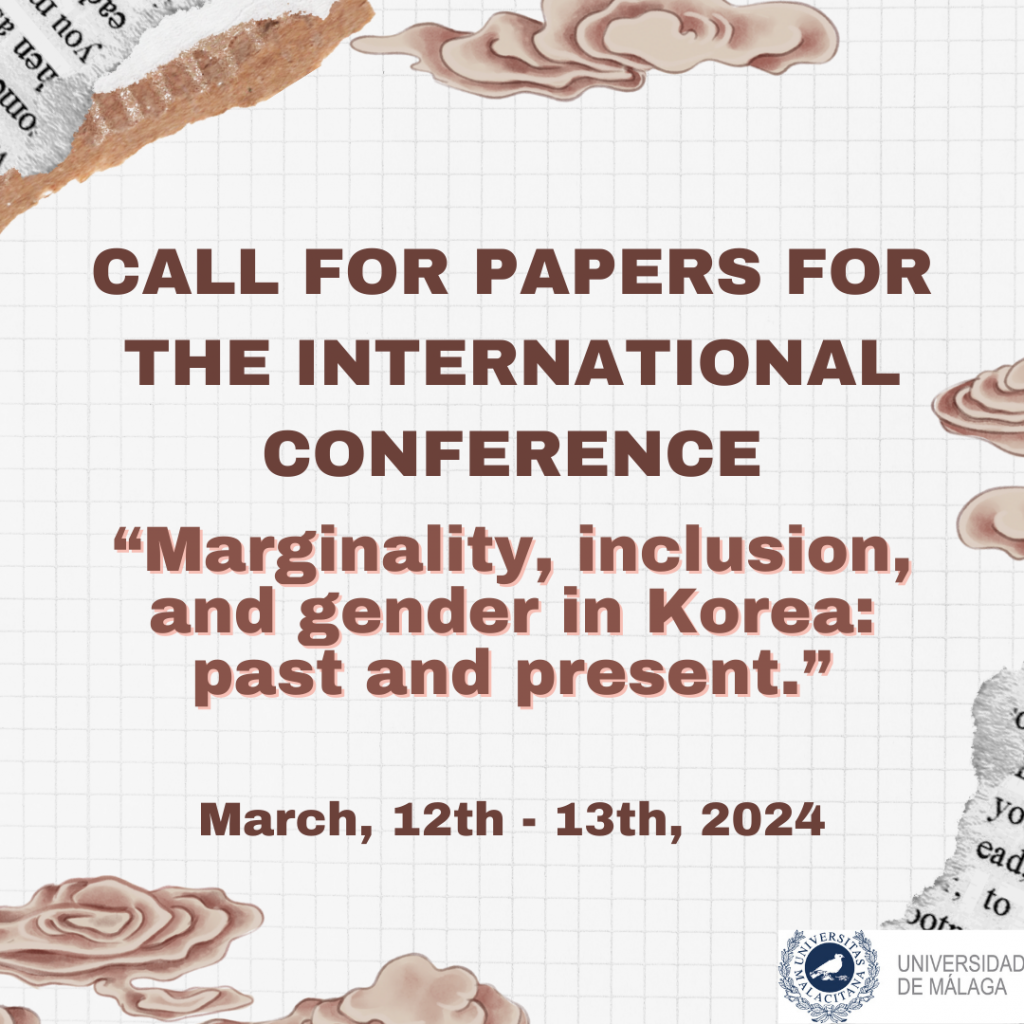
CFP: INTERNATIONAL CONFERENCE "MARGINALITY, INCLUSION, AND GENDER IN KOREA: PAST AND PRESENT"


International Conference

Marginality, inclusion, and gender in Korea: past and present


The East Asian Studies Area of the University of Malaga, Spain is pleased to announce the International Conference “Marginality, inclusion, and gender in Korea: past and present” on March 12th, 13th of 2024.

The Conference is organized as part of the research project Academy of Korean Studies Seed Program for Korean Studies (Advanced Track) “Path to Equality: Korean Studies Network on inclusiveness” (AKS-2021-INC-2250002) the Spanish National project I+D+I ASIA-SLAVES “The road to freedom in the Joseon period in Korea: Slavery and abolitionism in the context of East Asia” (PID2020-116910GB-I00) and the University of Málaga research project “Life Stories of Korean Gisaeng Slaves” (B1-2022_07).

This conference aims to consider the interrelated processes of discrimination and integration of social groups inside Korean society from a broad methodological and thematic perspective. This Call for papers encourages contributions dealing with the analysis of the cultural and institutional process of social discrimination in Korea, as well as political movements and institutional transformations directed to the integration of social groups previously discriminated against. The following topics are of interest, but are not limited to these: nobi system, discrimination against women, the situation of factory workers, disabled individuals, LGBTIQ+ communities, or migrant minorities. It is also considered of interest Korean social movements that through history have advocated for the rights of these marginalized groups, such as democratic unions in the 1970s and 80s, LGBTQ+ activists, or NGOs supporting disabled people and migrants.

The conference is organized in 4 panels to be composed by a maximum of 4 speakers.
  • Panel 1: Gender, voices of women and gisaeng in Korea
  • Panel 2: Slavery, force labour and human trafficking in Korea
  • Panel 3: Social minorities in Korea
  • Panel 4: Social and political activism in Korea
* Conference languages are English and Korean, and online presentations are permitted.


Proposal submissions

To propose an individual presentation, please send a maximum of 300-word abstract on the topic of your presentation (either in English or Korean). The proposals will be sent at the following account asiaoriental@uma.es. The file and subject of the email should include name as follow: Lastname_IntConferenceMIGKorea (ex: Kang_IntConferenceMIGKOREA). Submissions should be sent before November 15th, 2023

Abstracts should include:
  1. Name, position and affiliation
  2. Title of the paper
  3. Abstract
  4. Keywords
You will be sent a confirmation that your application has been received. If you do not receive a confirmation within 5 days after you sent it, please, send your application over again.

In the case of being selected, it will be expected to submit a full-paper before the conference with the possibility, after submission, of being selected for the publication in the format of an edited volume.

*Depending on the final budget the organization might support partially attendance expenses.


Important information:

Organizer contact details: asiaoriental@uma.es

Dates of the conference: March, 12th-13th, 2024.

Conference venue: University of Malaga, Spain.

Application deadline: November, 15th, 2023.

Submitting full paper: will be noticed after accepting proposals.

CFP: VERGE ISSUE 12.1 STUDIES IN GLOBAL ASIA


Verge Issue 12.1: Studies in Global Asia

“Trade in Humans”


A PDF of this call is available here. Please direct all questions to verge@psu.edu.

Trade in humans is a vast and age-old engine of migration between regions in the Asia-Pacific and, since the sixteenth century, from Asia to the Americas, Africa, and Europe. This special issue of Verge seeks to illuminate both the ubiquity of the trade in Asian people and its particularities across time and space. Indispensable to both Asian polities and Western empires, to nation-building in the Americas and to the development of global capitalism, Asians as agents and objects of trade in humans also formed the core of Asian diasporas and hybridized cultures worldwide. Such circulation of Asian persons and labor profoundly influenced the formation of our modern world.

In documenting the widespread trade in Asian people, scholars have been divided on whether to call it a slave trade, with some identifying cases that clearly fit the term, while others eschew it in favor of a range of alternatives. Asian languages offer many relevant terms – such as人身売買 [Japanese for “buying and selling human bodies”] or sŏnsang nobi 選上奴婢 [Korean for “slaves selected and sent up to the capital”] – for practices that may not map neatly onto Western legal and cultural categories.

We use the term “trade in humans” in hope that this issue will engage with a broad scope of historical and contemporary forms of commodification, sale, alienation, and forced migration of Asian people. Rather than presume the forms and limits of exploitation, we seek to open up a conversation across fields and terminological silos. Topics explored may potentially range from slave trading to adoption, child marriage, resettlement, trafficking, indentured labor, “coolietude,” and military conscription.

This special issue will attend to problems of translation and the texture of human experience undergirding linguistic, legal, political, and cultural attempts to represent or obfuscate the transregional trade in humans. We seek contributions from a wide variety of fields: Asian studies and Asian American studies, history, legal studies, sociology, anthropology, and diaspora studies, among others. We welcome contributions that explore the influence of these diverse trades across all Asian regions, the Americas, and beyond, as well as local or international legacies.


Convergence Feature Proposals

One of Verge: Studies in Global Asias’ distinctive features is an opening section called Convergence, where we curate a rotating series of rubrics that emphasize collaborative intellectual engagement and exchange. Each issue features several of the following rubrics: A&Q, a responsive dialogue, either in interview or roundtable format, inspired by a set of questions; Codex, a collaborative discussion and assessment of books, films, or exhibits; Translation, for texts, primary or secondary, not yet available in English; Field Trip, reports from various subfields of the disciplines; Portfolio, commentaries on visual images; and Interface, texts exploring the resources of the print-digital world. We welcome those interested in these features to submit a Convergence proposal for the issue.

Proposals should be 1–2 pages in length and indicate what kind of feature is being proposed; demonstrate an awareness of the formats utilized by the journal; include an abstract and, if collaborative, a list of proposed contributors; and include a short (2 pg) cv.

The Convergence proposals deadline is March 15, 2024; however, we encourage those interested in submitting a proposal to contact the editors about their ideas in advance of this date. Please direct all inquiries and submissions to verge@psu.edu.


Essay Submissions

Essays (between 6,000-10,000 words) and abstracts (125 words) should be submitted electronically through this submission form by August 30, 2024 and prepared according to the author-date + bibliography format of the Chicago Manual of Style. See section 2.38 of the University of Minnesota Press style guide or chapter 15 of the Chicago Manual of Style Online for additional formatting information.

Authors’ names should not appear on manuscripts; instead, please include a separate document with the author’s name, address, institutional affiliations, and the title of the article with your electronic submission. Authors should not refer to themselves in the first person in the submitted text or notes if such references would identify them; any necessary references to the author’s previous work, for example, should be in the third person.

CFP: 2023 IKSU-K-UNIFICATION FRIENDS INTERNATIONAL CONFERENCE FOR YOUNG SCHOLARS


Tracing the Steps Toward Korean Unification: Learning from the Past to Prepare for the Future,

2023 IKSU International Young Scholars Conference


The International Institute of Korean Studies (IKSU) at the University of Central Lancashire (UCLan) is pleased to announce the 2-day 2023 IKSU International Young Scholars Conference. The conference aims to give junior scholars in the field of Korean studies and unification studies an opportunity to present their research, strengthen ties with other young scholars, and raise awareness of the unification issue in the Korean peninsula among the youth.

The conference aims to facilitate informed, interdisciplinary discussions on the potential benefits and challenges of Korean Unification by looking into how we can learn from the past toward preparing for the future. We are inviting young scholars aged between 19-34 including early career researchers who obtained their PhD degree in the recent five years and PhD candidates who are near to completion of their PhD programmes doing their research in relation to the theme of the forum.
  • Submission Details: Abstract Submission Deadline (max. 500 words): 15 October 2023
  • Acceptance Notice: 31 October 2023
  • Full Paper Submission Deadline (min. 4,000 words including references): 20 November 2023
  • Conference Dates: 1-2 December 2023.
Presenters will receive an honorarium of KRW 400,000 upon successful submission of a policy brief following the conference. Participants are expected to summarize their research into a 1-2 page-long policy brief that will be published through the Northern England Policy Centre for the Asia Pacific (NEPCAP) website.

CFP: "NIGHT WORK" INTERNATIONAL LABOR AND WORKING-CLASS HISTORY JOURNAL

Night Work Across Time & Place” Special Issue of


The International Labor and Working-Class History Journal (ILWCH) invites contributions for a special thematic issue that will examine histories of night work, broadly speaking. Shiftwork and overnight “graveyard shifts” have proliferated since the 19th century, particularly with the rise of industrial manufacturing and the service industry. This special issue will historicize such night work and explore both its antecedents and aftermaths. In particular, we encourage submissions that examine the gendered, racial, or class contexts of night work as well as its social, psychological, and physical effects. We welcome contributions from any geographical or chronological field.
  • Possible themes to consider:Home or piecemeal work (and its gendered history);
  • Janitorial or other forms of ‘unseen’ work done at night and/or in the dark;
  • Activism and labor organizing around shift or night work;
  • Health and medical work, including nighttime child care and nursing;
  • The legal history of work hours, night shifts, and their regulation;
  • Health implications of night shiftwork on the body;
  • The night-time, or nightlife, economy and its evolution;
  • Nocturnal mobility and geographies.
The co-editors are actively looking to represent a wide range of historical periods and places, and thus encourage manuscripts focusing on worker communities in Africa, Asia, Latin America, Canada, the Caribbean, the United States, and Europe. Along with conventional 6,000-8,000-word manuscript submissions (including footnotes), this issue will also consider shorter photoessays, transcribed interviews with workers and/or employers, and notes from the field.

Prospective authors should send an abstract of 500-1,000 words, along with their email and institutional or work affiliation, to the co-editors by October 15, 2023. If invited to submit a piece, the deadline for a completed manuscript for peer review will be December 1, 2023.

All queries and submissions should indicate that they are for the “Night Work” special issue and sent to:


Lori A. Flores, Stony Brook University (lori.flores@stonybrook.edu)


Contact Information

Allyson Brantley, abrantley@laverne.edu

Lori A. Flores, lori.flores@stonybrook.edu

CFP: "M32 - CITIES AND THE ENVIRONMENT UNDER TWENTIETH CENTURY AUTHORITARIAN REGIMES", EUROPEAN ASSOCIATION FOR URBAN HISTORY (EAUH) CONFERENCE


“M32 - Cities and the Environment under Twentieth Century Authoritarian Regimes”, 


Short abstract

This panel focuses on the environmental history of cities with particular focus on authoritarian regimes across the globe. The panel aims to incorporate papers analyzing the history of cities and the environment on both the political left and right starting from the Russian Revolutions until the collapse of the Soviet Union.


Session content

When historians of technology or the environment have investigated the environmental consequences of authoritarian regimes, they have frequently argued that authoritarian regimes have been unable to produce positive environmental results or adjust successfully to global structural change, if they have shown any concern for the environment at all. Put another way, the scholarly consensus holds that authoritarian regimes on both the left and the right generally have demonstrated an anti-environmentalist bias, and when opposed by environmentalist social movements, have succeeded in silencing those voices.

In contrast, this panel takes as its points of departure that authoritarian societies have developed environmentalist policies of their own, that environmentalism is a protean ideology, and that the sets of structures and priorities prevailing in the West represent only some of many possibilities.

The present panel aims to investigate the above described theory on the environmental history of cities with particular focus on authoritarian regimes across the globe. This panel aims to incorporate papers analyzing the history of cities and the environment on both the political left and right starting from the Russian Revolutions until the collapse of the Soviet Union. Although the panel's chronology is linked to the existence of the USSR, its focus is not confined solely to socialist cities, rather it aims to facilitate discussion between scholars working with rightwing and leftwing authoritarian regimes across the globe from Latin America, Asia and the Pacific, Africa and Europe.

Suggested themes for individual papers include:
  • Politics and the environment in authoritarian regimes
  • Urban planning under authoritarian regimes (construction/destruction, new concepts) and its environmental dimension
  • Authoritarian regimes, cities and economic growth (impact of industry, commerce and networks)
  • Water and the city (Urban water bodies, Municipal and industrial water and wastewater)
  • Consumption and waste; waste management in authoritarian regimes
  • Urban space, environmental disasters and their solutions in authoritarian regimes
  • War, war preparation and the urban environment
  • Air quality: heating, transport, industry
  • Animals in the city
  • Leisure and green spaces
  • Suburbanization, motorization,
  • City and its surroundings: urban metabolism
Any other theme that fits the proposed methodological and chronological frame of the panel is welcome!

Please submit your proposals by September 30, 2023.

Kindly see the submittal guidelines.


Contact Email

cesh@osu.cz

CFP: "AFRICA-ASIA AND THE WORLD" INTERNATIONAL AND INTER-TRANS-DISCIPLINARY OFFLINE AND ONLINE CONFERENCE


“Africa-Asia and the World”

International and Inter-Trans-Disciplinary Offline and Online Conference


AFRICA-ASIA AND THE WORLD: WHAT RELATIONS FOR GLOBAL PEACE, JUSTICE, PROSPERITY AND SUSTAINABILITY? 

International and Inter-Trans-Disciplinary Offline and Online Conference of:
  • Inauguration of African-Asian and International Studies Institute AFRASI;
  • Commemoration of the 65th Anniversary of the 1958 Accra All-African People’s Conference Ouagadougou, Burkina Faso, December 13-15, 2023 

Abstracts to be submitted online up to September 30, 2023 at here.

Contact: secretariat-afrasi@e-group.bandungspirit.org


INTRODUCTION

At the beginning of the new millennium, Africa remains a place where economic, geopolitical, and cultural interests from all over the world converge. Diverse summits with Africa have been organized regularly to shape the exchanges of the continent with global players (China-Africa/FOCAC, Japan-Africa/TICAD, India-Africa, Korea-Africa, Turkiye-Africa, Iran-Africa, Indonesia-Africa, Regular Commemorative Conferences of the Asian-African Conference, USA-Africa, EU-Africa, etc.). Another proof of the continent's importance on the world stage is the increasing presence of Asian countries such as China, India and Japan, or the return of historically relevant players such as Russia, not to mention the attempts of former colonizing powers to maintain their influence. Thus, the suspicious views of relations between Africa and Asia (especially China) and Eurasia (especially Russia) presented in the Western mainstream media do not do justice to the historical ties between Africa and Asia/Eurasia since at least the Bandung Conference (April 1955) characterized by their common struggles against colonialism and for independence.

Several points of convergence make it fair to focus on the Africa-Asia tandem. From a historical point of view, these are the continents that, despite European colonial ambitions, have retained their demographic and cultural bases, unlike other areas such as America and Australia, where colonial conquest and occupation were accompanied by the genocide of indigenous peoples, the suppression of their cultures and the installation of European culture, and where the descendants of colonial rulers and European immigrants continue to rule the areas to the present day. Moreover Africa and Asia shared common painful experiences of being colonized by European imperial power and common struggles for their independence at the same historical period (19th-20th centuries). In a world marked by global and diverse crises, Africa, and Asia, being distinctive in term of civilization from Western-dominated ones, have the potential to offer alternatives for rethinking their relationship with the world, based on imaginations, cultures, and development models different from the Western-led globalization. Considering demographic growth, projections predict that 80% of the world's population will be in Africa and Asia by the end of this century; this could be seen as a problem but also as an opportunity to take advantage of a tremendous human capital for the development of Asia and Africa, and concomitantly of the world. In economic terms, Asia has become Africa's leading trading partner. The search for new economic and political partners, particularly in Africa, signals that both continents will strengthen existing ties and find new avenues for cooperation. Convergence between Asia and Africa is also clear since they are confronted with common challenges, which includes poverty eradication and creation of social justice, security issues, the management of ethnic and religious diversity, and exploitation of natural resources for sustainable development and prosperity of people.

The international and inter-trans-disciplinary conference "Africa-Asia and the World: What Relations for Global Peace, Justice, Prosperity and Sustainability?" aims to reflect on these relations between Africa and Asia, as well as those between the African-Asian tandem and the rest of the world. Based on the diversity of approaches and disciplines of the speakers, this conference will be an opportunity to better understand and recommend policies of political, economic, and cultural relations to be developed between Africa and Asia, and with the rest of the world, to build a common future, based on more peace, justice, prosperity and sustainability.


ISSUES

The followings are non-exhaustive issues expected to be raised in the conference:
  • Before and beyond hegemony of the West: what were and will be Africa-Asia relations?
  • Africa-Asia and Africa-Eurasia: what convergence and what divergence?
  • Africa, Asia, Eastern Europe and Latin America: do they continue to be the peripheries of the West?
  • Africa-Asia Business Development: what challenges and what perspectives?
  • MSME (Micro, Small, and Medium Enterprises) in Africa and Asia: what role in national economy and what mutual exchanges are possible?
  • BRICS summit in Africa: what impacts on Africa?
  • NAM, BRICS, Africa, Asia and Latin America: what synergy for a global restructuring?
  • The West and Asia in Africa: what interests and what risks for Africa?
  • The summits of China-Africa, India-Africa, Japan-Africa, Korea-Africa, Turkiye-Africa, Iran-Africa, Indonesia-Africa, EU-Africa, USA-Africa: what perspectives for Africa?
  • FESPACO and BIFF (Busan International Film Festival): what relations are mutually and globally beneficial?
  • African, Asian and American Tropical Forests: what challenges and perspectives for economy and ecology?
  • Black-lives-matter: racism against African and Asian in the West, does it continue?
  • Tradition, Culture and Religion: what role in patriarchy and gender issues?
  • Indigenous and Imported Religions: what challenges and what perspectives for a peaceful co-existence or fusion?
  • Languages and Nations: what place for former colonial languages in national independence and sovereignty?
  • The Afrodescendant in America, Asia, Australia, Europe, Pacific and Oceania: who are they and what do they become?
  • Demography, Migration, Urbanisation, Ruralisation: what planning and what mitigation?
  • The G20 and the 20 poorest countries in the world: what relations?
  • The G20 Summits: what impacts on Africa?
Other relevant issues will be welcome.


OFFLINE AND ONLINE PARTICIPANTS

The conference encourages the participation of scholars from a wide range of scientific disciplines (area studies, cultural studies, ecology, economics, geography, history, humanities, languages, management, political and social sciences...) and practitioners from diverse professional fields (business, civil society, education, enterprise, government, management, parliament, public policy, social and solidarity movements...) as well as artists, writers, journalists and activists of social and solidarity movements, based in diverse geographical areas (North, South, East, West, Central AFRICA; North, Central, South AMERICA; the CARIBBEAN; AUSTRALIA; North, East, West, Central, South and Southeast ASIA; Central, Eastern, Southern, Northern, Western EUROPE; RUSSIA, PACIFIC, OCEANIA...).


GUIDELINES FOR PRESENTER CANDIDATES

The selection of presenters is based on the abstract and the basic personal data of the presenter candidates in respect to the following dates:

1) Deadline of abstract (200-300 words) submission: September 30, 2023
2) Deadline of full paper (2000-3000 words / 5-6 pages) submission: October 31, 2023
3) Notification for the selected presenters: progressively from July 2023. The earlier an abstract is submitted, the earlier its author will get notified, which is important for a travel planning.

The abstract is to be submitted online.


FINANCING

The organising committee does not provide travel grant to any participant. The presenters as well as simple participants of the conference are supposed to find the necessary fund for their own participation (visa, international and national transport, accommodation).


Contact Information

Darwis Khudori, Faculty of International Affairs, University Le Havre Normandy, France

Contact Email: secretariat-afrasi@e-group.bandungspirit.org