Una vez más, exploramos las publicaciones académicas más recientes en los estudios coreanos, abarcando diversas áreas del conocimiento. Desde las ciencias sociales, donde se abordan temas como la política, la migración y las prácticas educativas, hasta las humanidades, que nos ofrecen nuevas perspectivas sobre la cultura popular, la filosofía y las artes contemporáneas de Corea. Estas investigaciones revelan cómo las tradiciones, las transformaciones sociales y las influencias globales configuran la Corea del presente.
CFP: "M32 - CITIES AND THE ENVIRONMENT UNDER TWENTIETH CENTURY AUTHORITARIAN REGIMES", EUROPEAN ASSOCIATION FOR URBAN HISTORY (EAUH) CONFERENCE
- Politics and the environment in authoritarian regimes
- Urban planning under authoritarian regimes (construction/destruction, new concepts) and its environmental dimension
- Authoritarian regimes, cities and economic growth (impact of industry, commerce and networks)
- Water and the city (Urban water bodies, Municipal and industrial water and wastewater)
- Consumption and waste; waste management in authoritarian regimes
- Urban space, environmental disasters and their solutions in authoritarian regimes
- War, war preparation and the urban environment
- Air quality: heating, transport, industry
- Animals in the city
- Leisure and green spaces
- Suburbanization, motorization,
- City and its surroundings: urban metabolism
CFP: "CURRENT COMPARATIVE LITERARY STUDIES IN EAST ASIA", CONCENTRIC LITERARY AND CULTURAL STUDIES
ÚLTIMAS PUBLICACIONES ACADÉMICAS 2023 (III)
Continuamos con nuestra revisión de los libros académicos relacionados con los estudios coreanos que se han publicado a lo largo del segundo trimestre de 2023. Un listado centrado en diversas y muy variadas áreas dentro de los campos de las Ciencias Sociales y Humanidades, puestos ya a disposición de todos por las diferentes editoriales que facilitamos a continuación:
PERSPECTIVES ON CONTEMPORARY KOREA SUMMER INSTITUTE

- A Letter of Intent of no more than two pages describing current scholarly interests and how participation in the Summer Institute would contribute to the applicant’s academic plans. The statement should include information about courses taken in relevant fields if any.
- A current curriculum vitae
- A sample of recent writing
CFP: THE KOREAN PENINSULA, A MULTIDISCIPLINARY PERSPECTIVE, INTERNATIONAL SYMPOSIUM
- The demographical challenges, solutions, and obstacles South Korea faces in the last few years. Is it an obstacle at all?
- The economic policy. How should the government, financial and industrial sectors adapt to the new global changes? What is the role of China in these economic changes?
- Cultural aspects. President Yoon Suk-yeol declared that he will invest three billion dollars in South Korean culture. How should Korea balance its investments in culture? Should we change our soft power perspective in the coming years?
- Historical preservation. What efforts and aspects of preservation are taking place in contemporary Korea? How should Korea's historical assets be presented to the public?
- The security challenges. The new North Korean drone incident and the debate on how South Korea should develop its own nuclear capabilities, raise questions about South Korea's defense policy.
- The influence of populism in the Korean political arena. Political discourse, and the use of social media.
- Historical narratives between Korea and its neighbors.
CONFERENCIA CASA ASIA: LA GEOPOLÍTICA EN EL INDOPACÍFICO Y LA POSICIÓN DE COREA
- Emilio de Miguel, embajador en misión especial para el Indopacífico y director del Centro Casa Asia-Madrid.
- María Castillo, embajadora de la Unión Europea para la República de Corea.
- Ramón Pacheco, catedrático de Relaciones Internacionales en el King’s College de Londres, y titular de la Cátedra KF-VUB de Corea en la Brussels School of Governance de la Universidad Libre de Bruselas (intervención online)
- Fecha: Jueves 16 de marzo de 18.00 h a 19.00 h CET
- Lugar: Centro Casa Asia-Madrid. Calle Mayor, 69. Madrid
- Precio: Actividad gratuita previa inscripción.
- Organiza: Casa Asia
- Inscripción: enlace
ÚLTIMAS PUBLICACIONES ACADÉMICAS 2023 (I)
Retomamos un año más nuestros listados con las últimas novedades académicas que han visto la luz en el último trimestre de 2022. Avances publicados en formato libro dentro del ámbito de los Estudios Coreanos, abordadod desde diferentes disciplinas dentro de las ciencias y las humanidades. Todas ellas ya disponibles para todos a través de las múltiples editoriales que también facilitamos a continuación:
CFP: “THE RISE OF ASIA IN GLOBAL HISTORY AND PERSPECTIVE”, INTERNATIONAL AND INTERDISCIPLINARY CONFERENCE
CONVOCATORIA 2023 PROGRAMA DE BECAS DEL KDI
- Master of Public Policy
- Master of Development Policy
- Master of Public Management
- Master in Intellectual Property and Development Policy
- Ph.D. in Public Policy
- Ph.D. in Development Policy
- (Master) 1 ~ 1.5 años
- (Ph.D) 3 años
- Presentación de solicitudes: desde el 1 de septiembre hasta el 23 de septiembre de 2022 (viernes, hasta las 18:00, KST)
- Evaluación de la documentación y entrevista personal: en el mes de octubre y noviembre
- Comunicación a los candidatos seleccionados: a principios de diciembre de 2022
- Apertura del Curso: febrero de 2023
- Telf. +00-82-44-550-1175/1281
- Correo electrónico: internationaladmissions@kdis.ac.kr
CFP: COLD WAR BORDERLANDS IN EUROPE AND NORTHEAST ASIA, 1944-1991
- security policies across borders during the Cold War
- militarization of the borders and the impact on local communities
- communities and forced population transfers in the borderlands
- impact of the Cold War on national minorities living along the borders
- propaganda across borders
- trade and smuggling across borders, border controls, and the prevention of crossing
- economic cooperation (formal and informal) across borders
- literary and film depictions of the borderlands
- impact of the Cold War on landscapes and infrastructure in border regions
- local border traffic, shopping, tourism and cultural exchange across borders during the Cold War
- policies of the great powers towards the borderlands
- naval borders during the Cold War and the Law of the Sea
- political and social changes in borderlands in the context of European integration
- legacies and memories of Cold War borders in modern day Europe
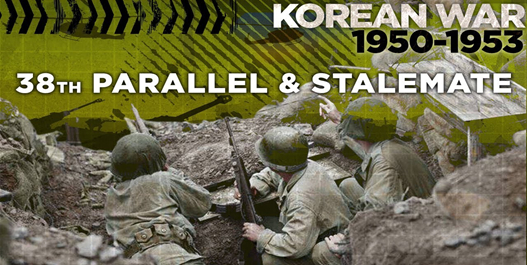
INTERNATIONAL CONFERENCE. UNITED NATIONS AND KOREAN WAR (1950-1953). POLITICS, WAR AND PEACE

- Policy of the UN for Korean War: The involvement of the United Nations (UN) to the Korean War was significant for South Korea (positively) and North Korea (negatively). How was the decision made so early? Who was involved in the process? How was the policy implemented internationally?
- Human Movements, POWs and Refugees: The war directly impacted the relocation of the local people (6.3 million).The waralso caused many POWs and refugees. How was the geographical landscape of the human movements? What was the situation of refugees? Were the POWs treated fairly?
- War Strategy and Battles: The various war strategies were applied at the battlers of the Korean War between the army, navy (the marine corps) and air force of China, Russia, UN, North and South Koreas. How was the strategy changed? What was the turning point for each other? Which battles were significant? What about the condition of retrogression?
- Narratives of Victims and Casualties (Soldiers and families): The war generated many victims (death and wound) which affected the emotional and mental condition of family members. What was the story of individual involvement? How do they remember the East Asian war? What is the post-war life of soldiers? Do they have any story in relation with Korean people?
- Human Rights and Welfare (medicine, orphans, and education): Under the military situation of the Korea war, there were the various activities of international, public and NGO organisations in the sphere of human rights. How was the medical service provided? How were orphans managed? Was any activity of education continued?
- Theory and Method in Unification and Peace Process: Since the Korean War has been 70 years and remained as an unfinished war, what kind of theory or method can be adopted for the development of Korean Unification? How can the peace process take a place for the future of both Koreas?
- Paper title
- Nominated stream
- Name and affiliation
- Contact details (email)
- Abstract of 150-200 words
- Biography of 80 words highlighting teaching and research interests and publications (3-4 title and year only).
- Proposal deadline: 15 June 2022
- Notification: 30 July 2022
- Registrations open: 05 August 2022
- Registrations close: 30 August 2022
- Conference: 21-24 October 2022
- Full-time scholar: $300
- Student/ part-time and unwaged scholar/ audience: $250
- Local Korean scholar: $200
- Publishers and Bookshops: $400
WEBINAR «LA GUERRA EN UCRANIA: ¿QUÉ PAPEL PUEDE JUGAR ASIA?»
“THE IBERIAN EMPIRES IN ASIA: POLITICAL TENSIONS AND IMPERIAL KNOWLEDGE”, PERMANENT SEMINAR IBERIAN WORLDS AND EARLY GLOBALIZATION
- “Una religiosa castellana en el Macao portugués del siglo XVII: entre visiones místicas, estrategias políticas y anhelos apostólicos”
- “A Castilian nun in 17th-century Portuguese Macao: Between mystical visions, political strategies and apostolic yearnings”
- “El Códice Boxer en una perspectiva comparada: saberes imperiales en las Indias de Castilla y Portugal”
- “The Boxer Codex in comparative perspective: Imperial knowledge in the Castilian and Portuguese Indies”
CFP: THE INTERNATIONAL CONFERENCE ON POPULISM IN ASIA: THE SAME OR DIFFERENT STORY?
- Populism and Nationalism
- Populism and Democracy
- Populism and Social Movement
- Populism and the Internet
- Populism and the Middle Class
CFP: BEYOND WORK FOR PAY? BASIC-INCOME CONCEPTS IN GLOBAL DEBATES ON AUTOMATION, POVERTY, AND UNEMPLOYMENT (1920-2020)
- The intellectual, political, and ideological genesis of the negative income tax and similar basic income concepts deemed to preserve the income-work-paradigm in North America, Western Europe, and eventually in other parts of the world beginning in the 1960s.
- Basic income and the changing dynamics of “expert” policy-making, amidst the proliferation of regional, national, and global governmental and NGO policy actors and the prominence of contested and often conflicting bodies of economic knowledge in policy debates.
- The gender, race, citizenship, generational, and broadly intersectional dimensions of basic income concepts and policy proposals, as reflected in social movement politics and in public debates.
- Basic income and the history of anti-poverty policy, within national frameworks and in the formulation of global development goals.
- The significance of basic-income concepts in larger cultural, societal, and political shifts that historians have associated with the 1970s and 80s, such as an emphasis on markets, limited government, and the privatization of welfare systems.
- Automation, basic income, and the shifting political economy of the “full employment” welfare state.
- The history and normative assumptions shaping basic income “experiments” since their first introduction in the late 1960s and 70s, in the U.S. and Canada and more recently in Finland, India, and Namibia. What is the history of these experiments, and how do their normative assumptions (and the assumptions of the media covering these experiments) preserve a commitment to income-work or abandon it in favor of other life concepts?
- The shifting nomenclature of basic income and how framing it in terms such as “social dividend,” “basic minimum,” “guaranteed,” or “unconditional” income reflect efforts to reshape public conversation about the parameters of the social contract.