Mostrando entradas con la etiqueta Internacional. Mostrar todas las entradas

CFP: THE KOREAN PENINSULA, A MULTIDISCIPLINARY PERSPECTIVE, INTERNATIONAL SYMPOSIUM


The Korean Peninsula, A Multidisciplinary Perspective. International Symposium

June 21-22, 2023 The Bar-Ilan University (hybrid)


Last year (2022) the Korean Studies conference commemorated 60 years of diplomatic relations between the Republic of Korea and some Middle Eastern countries, including Israel. This year, the conference’s focus will be on the Korean Peninsula from a multidisciplinary perspective.

The security threat from the North that South Korea is dealing with, considered to be a major topic in the field of Korean Studies in Israel for many years. To broaden the discussion, the 2023 Korean conference will include other challenges and themes that both Koreas face, including (but not limited):
  1. The demographical challenges, solutions, and obstacles South Korea faces in the last few years. Is it an obstacle at all?
  2. The economic policy. How should the government, financial and industrial sectors adapt to the new global changes? What is the role of China in these economic changes?
  3. Cultural aspects. President Yoon Suk-yeol declared that he will invest three billion dollars in South Korean culture. How should Korea balance its investments in culture? Should we change our soft power perspective in the coming years?
  4. Historical preservation. What efforts and aspects of preservation are taking place in contemporary Korea? How should Korea's historical assets be presented to the public?
  5. The security challenges. The new North Korean drone incident and the debate on how South Korea should develop its own nuclear capabilities, raise questions about South Korea's defense policy.
  6. The influence of populism in the Korean political arena. Political discourse, and the use of social media.
  7. Historical narratives between Korea and its neighbors.
Asian Studies at Bar-Ilan University invite scholars from the humanities and the social sciences to discuss these issues. To offer new perspectives on these issues, and or other relevant themes that concern Korea (North and South). We will also invite comparison discussion between Korea and other global cases.

Individual presenters may submit an abstract of 300 words and a one-paragraph short CV. For panel proposals, please submit a one-page proposal and a short CV of the speakers. Email the information or if you have any questions to Dr. Alon Levkowitz (alon.levkowitz@biu.ac.il) by April 1, 2023.

Successful applicants will be notified by April 15, 2023.

On the evening of June 21st, we will host an opening dinner for all participants. Conformation of attendance is required. The conference panels will take place on June 22 at the Bar-Ilan University campus.

Participants are required to secure their own travel and accommodation arrangements. Limited hotel rooms will be offered for overseas participants. If you wish to be granted accommodation, please mention it in your proposal. Conference Organizers: Dr. Alon Levkowitz and Dr. Michal Zelcer-Lavid, Asian Studies, Bar-Ilan University

For questions regarding the conference, please contact Dr. Alon Levkowitz alon.levkowitz@biu.ac.il.

This conference is supported by the 2022 Korean Studies Seed Program of the Academy of Korean Studies (AKS-2022-INC-2230013) and the Dangoor Centre.

WEBINAR CASA ASIA: COREA EN EL NUEVO SISTEMA DE RELACIONES INTERNACIONALES


Corea en el nuevo sistema de relaciones internacionales,

Webinar Casa Asia


Con el objetivo de mostrar la proyección internacional de Corea se analizará la participación coreana en la nueva configuración de las relaciones intergubernamentales, determinada por el ascenso de China y por la política exterior estadounidense. Se recurrirá a tres espacios geográficos clave: en la península de Corea, mostrando la divergencia creciente de los objetivos de los gobiernos del Norte y del Sur; en Asia del Este, analizando el acercamiento necesario con Japón y, en la región del Pacífico, la tensión ejercida por tener a China como primer socio comercial y a Estados Unidos como garante de la seguridad.

Palabras de bienvenida:
Presenta:
Modera:
Conferencia a cargo de:

Biodata del conferenciante:

Juan José Ramírez Bonilla es doctor en desarrollo económico y social por la Universidad de Paris-I, Panthéon-Sorbonne; desde 1993, es profesor-investigador adscrito al Centro de Estudios de Asia y África de El Colegio de México; sus líneas de investigación son “Desarrollo económico y social en Asia del Pacifico” y “Procesos de integración económica en la región del Pacífico”. Entre sus publicaciones recientes destacan: La República de Corea ante la influencia de la administración Trump (El Colegio de México, 2020) y 60º Aniversario de la relación Corea-México. Evaluación y objetivos futuros (Embajada de la República de Corea en México, 2021).


Más información:
  • Fecha: Jueves 23 de marzo de 18.00 h a 19.30 h CET
  • Lugar: Online. 24 horas antes del acto las personas inscritas recibirán la información necesaria para acceder. Comprueba tu bandeja de correo no deseado en caso de no haberla recibirlo.
  • Precio: Actividad gratuita.

CFP: YONSEI JOURNAL OF INTERNATIONAL STUDIES


Published twice a year and managed by Yonsei GSIS students, the Yonsei Journal of International Studies (YJIS), known alternatively by the acronym PEAR (Papers, Essays, and Reviews), is a peer-reviewed graduate journal of international studies at Yonsei University’s Graduate School of International Studies in association with the Center for International Studies and Yonsei University Press, the first of its kind in both Korea and East Asia. The Yonsei Journal of International Studies has been selected as a sponsored journal by the Korean International Studies Association to contribute to the development of International Studies in Korea. The journal began as a joint effort between then Dean Chung Min Lee and five graduate students in December of 2008. They envisioned a canvas for students at the Graduate School of International Studies to express themselves academically, while at the same time receiving invaluable experience and feedback for their work. Located on the 5th floor of New Millennium Hall at Yonsei University in Seoul, South Korea, YJIS strives to be the utmost academic voice for graduate students not only in Korea but in all of East Asia.

We now have a call for papers open for our Fall/Winter 2022 issue. Detailed submission guidelines.

Papers may be submitted via Google form.

Please review submission guidelines carefully. Papers that do not follow submission guidelines will not be considered for publication.

Please review past issues to get a sense of the topics we publish. 

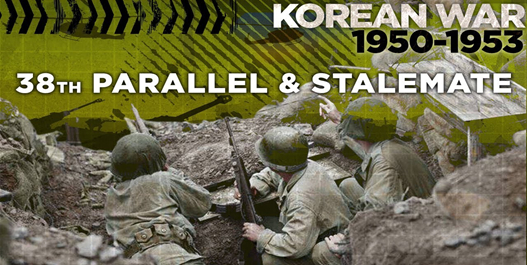
INTERNATIONAL CONFERENCE. UNITED NATIONS AND KOREAN WAR (1950-1953). POLITICS, WAR AND PEACE


International Conference:

United Nations and Korean War (1950-1953): Politics, War and Peace

21-24 October 2022, Pusan National University, Korea


After World War II, the geopolitical tension of East Asia, especially the Korean peninsula became critical. The beginning of the Cold War between two different ideologies of Communism and Democracy was eventually visualised through the military conflict of the Korean War (1950-1953). The United Nations (UN) dispatched soldiers from sixteen countries as well as medical support from six nations. Then, what is the relationship between the United Nations and the Korean War? Which countries were involved in the war? What were the political and international issues? How was the war seen to outsiders? What kind of grassroots narratives did the soldiers, families and Koreans have?

The aim of this conference is to explore the involvement of the United Nations for ‘the Forgotten War’ through the various case studies of individual, group, or nation. The theme can be analyzed in a multidisciplinary approach of history, politics, anthropology, sociology, war strategy, human movement, medicine, refugee, POWs, Busan studies, unification policy, education, and human rights. If you are interested or your current research is on the subject or relevant to the Korean War, we invite your paper for the international conference in 2022.


Proposed streams:
  1. Policy of the UN for Korean War: The involvement of the United Nations (UN) to the Korean War was significant for South Korea (positively) and North Korea (negatively). How was the decision made so early? Who was involved in the process? How was the policy implemented internationally?
  2. Human Movements, POWs and Refugees: The war directly impacted the relocation of the local people (6.3 million).The waralso caused many POWs and refugees. How was the geographical landscape of the human movements? What was the situation of refugees? Were the POWs treated fairly?
  3. War Strategy and Battles: The various war strategies were applied at the battlers of the Korean War between the army, navy (the marine corps) and air force of China, Russia, UN, North and South Koreas. How was the strategy changed? What was the turning point for each other? Which battles were significant? What about the condition of retrogression?
  4. Narratives of Victims and Casualties (Soldiers and families): The war generated many victims (death and wound) which affected the emotional and mental condition of family members. What was the story of individual involvement? How do they remember the East Asian war? What is the post-war life of soldiers? Do they have any story in relation with Korean people?
  5. Human Rights and Welfare (medicine, orphans, and education): Under the military situation of the Korea war, there were the various activities of international, public and NGO organisations in the sphere of human rights. How was the medical service provided? How were orphans managed? Was any activity of education continued?
  6. Theory and Method in Unification and Peace Process: Since the Korean War has been 70 years and remained as an unfinished war, what kind of theory or method can be adopted for the development of Korean Unification? How can the peace process take a place for the future of both Koreas?

Proposals:

Please send your abstract or panel proposals to David W. Kim (davidwj_kim@yahoo.co.uk) including the following information:
  • Paper title
  • Nominated stream
  • Name and affiliation
  • Contact details (email)
  • Abstract of 150-200 words
  • Biography of 80 words highlighting teaching and research interests and publications (3-4 title and year only).
Proposals for panels of 3 or 4 papers must include the above information for all papers and a brief description of the panel itself of 100 words.


Key dates:
  • Proposal deadline: 15 June 2022
  • Notification: 30 July 2022
  • Registrations open: 05 August 2022
  • Registrations close: 30 August 2022
  • Conference: 21-24 October 2022

Registration fees:
  • Full-time scholar: $300
  • Student/ part-time and unwaged scholar/ audience: $250
  • Local Korean scholar: $200
  • Publishers and Bookshops: $400
Registration includes participation in all conference sessions, lunch, morning tea and afternoon tea on each day, conference dinner, registration pack, and post-conference tour (a half or one day). Publisher registration includes, in addition, a display desk, an opportunity to address conference delegates, and your logo on the conference program front page.


Bursary and Award:

There will be limited burary for some accepted doctoral candidates and early career researchers ($100-$300 each) as well as award for two best papers ($500 each). The bursary and award will be given away after conference.


Post-conference Publication:

The selected papers (in a blook volume) will be published by the Cambridge Scholars Publishing in UK.


Conference Committee:

(Chair) Asso. Prof. David William Kim (Australian National University and Kookmin University, Seoul)

(Co-Chair) Prof. Kiseob Kim (Director, Institute for Korean Unification, Pusan National University)

Research Prof. Jihyun Kim (Institute for Korean Unification, Pusan National University)


Contact:

Please address all inquiries to Dr. David W. Kim: davidwj_kim@yahoo.co.uk

UNESCO CALLS FOR PROPOSALS FOR THE 2021 SILK ROADS YOUTH RESEARCH GRANT


La UNESCO convoca propuestas para la

Beca de Investigación Juvenil de las Rutas de la Seda 2021


La UNESCO lanza una convocatoria para que mujeres y hombres jóvenes menores de 35 años soliciten la "Beca de investigación juvenil de las rutas de la seda" de 2021. Se otorgarán 12 becas de investigación de USD10.000. La subvención tiene como objetivo movilizar a jóvenes investigadores para que sigan estudiando la herencia compartida de La Ruta de la Seda.

La Silk Roads Youth Research Grant es una nueva iniciativa que la UNESCO ha organizado con el apoyo de la Comisión Nacional de la República Popular China para la UNESCO, en el contexto de sus programas Silk Roads y MOST que forman parte del Programa de Ciencias Sociales y Humanas de la UNESCO


La investigación debe abordar cuestiones específicas relacionadas con:

  • la herencia compartida de las Rutas de la Seda y las identidades plurales,
  • su diversidad interna,
  • su potencial en las sociedades contemporáneas para la creatividad, el diálogo intercultural, la cohesión social, la cooperación regional e internacional, y
  • en última instancia, paz y desarrollo sostenibles.


¿Quién es elegible para solicitar la subvención?

Los investigadores de posgrado, de 35 años o menos en el momento de la solicitud, son elegibles para solicitar la subvención. La investigación propuesta puede ser realizada por un investigador individual o puede ser parte de la investigación de un grupo o proyecto colaborativo. 


¿Qué campos de la investigación de las rutas de la seda son elegibles?

Son elegibles una amplia gama de campos de investigación, incluidas propuestas multidisciplinarias y multidimensionales que no se limitan a una región o cronología específica. La investigación propuesta puede cubrir uno o varios temas asociados con la herencia compartida de las rutas de la seda, que incluyen, entre otros:

  • Ciencia y Tecnología
  • Conocimientos tradicionales y artesanía
  • Religión y espiritualidad
  • Lenguaje y literatura
  • Artes y musica
  • Juegos y deportes tradicionales

¿Cómo presentar su propuesta de investigación?

Los solicitantes deben enviar sus propuestas de investigación completando la plantilla proporcionada que detalla su investigación, sus métodos, resultados esperados y contribución a la beca existente. Las propuestas deben enviarse en inglés y enviarse a: silkroadsgrant@unesco.org (el enlace envía un correo electrónico).


¿Cuando es la fecha límite?

La fecha límite para enviar propuestas es el 18 de abril de 2021.

Las propuestas de investigación presentadas serán evaluadas por un panel científico compuesto por académicos internacionales de renombre.

La lista de beneficiarios de la subvención se anunciará a fines de junio de 2021.


Directrices para solicitantes

Una guía completa de la subvención, que incluye detalles sobre los criterios de elegibilidad del solicitante, temas de investigación adecuados y proceso de evaluación, está disponible aquí:

Encontrará información más detallada sobre la Beca de Investigación Juvenil de Silk Roads aquí.


Divulgación importante

La UNESCO se reserva el derecho de modificar las reglas y regulaciones de las subvenciones cuando sea necesario, sin previo aviso.

CFP: FINANCIALISATION IN DEVELOPING AND EMERGING ECONOMIES: MANIFESTATIONS, DRIVERS AND IMPLICATIONS


Financialisation in developing and emerging economies:
Manifestations, Drivers and Implications

Overview

The Special Issue aims to provide an assessment of the financialisation process in developing and emerging economies (DEEs). It invites contributions on the theoretical and empirical specificities of the manifestations, drivers and implications of this process in these economies. It encourages interdisciplinary work, both in theory and method, and is particularly interested in papers, which make a conceptual contribution to the literature.

The analysis of financialisation in DEEs is relatively novel (Bonizzi, 2013). It is rooted in earlier discussions about the risks of financial globalisation and liberalisation, including the Latin American Structuralist literature on the hegemonic role of the US dollar (Belluzzo, 1997; Braga, 1997; de Mello, 1997; Fiori, 1997; Miranda, 1997; Tavares, 1997; Tavares & Melin, 1997); the debate on capital account liberalisation and capital market integration (Cohen, 1996; Rodrik, 1998; Stiglitz & Ocampo, 2008; Strange, 1994); the Minsky-inspired currency and boom bust dynamics of financial crisis in developing economies (Arestis & Glickman, 2002; de Paula & Alves, 2000; Dymski, 1999; Kregel, 1998; Schroeder, 2002); and the critique of financial liberalisation and integration of DEEs (Akyuz & Boratav, 2005; Barbosa‐Filho, 2005; Crotty & Lee, 2005; Frenkel & Rapetti, 2009; Grabel, 2003; O’Connell, 2005; Palma, 1998; Taylor, 1998).

SPRING KOREA CULTURAL CAMP PARA ESTUDIANTES INTERNACIONALES EN COREA, 2020


Spring Korea Cultural Camp for 
International Students in Korea, 2020


Con el propósito de aumentar la comprensión de los estudiantes extranjeros de la República de Corea del Sur, la AYFN Academy y organización local están ofreciendo un invaluable programa de inmersión cultural para el aprendizaje de la cultura coreana.

El Spring Korea Cultural Camp está disponible para proporcionar una oportunidad educativa única para estudiantes / jóvenes y estudiantes que deseen un programa de inmersión a corto plazo en el idioma coreano y cultura coreana.