Mostrando entradas con la etiqueta refugiados. Mostrar todas las entradas

INTERNATIONAL CONFERENCE. UNITED NATIONS AND KOREAN WAR (1950-1953). POLITICS, WAR AND PEACE


International Conference:

United Nations and Korean War (1950-1953): Politics, War and Peace

21-24 October 2022, Pusan National University, Korea


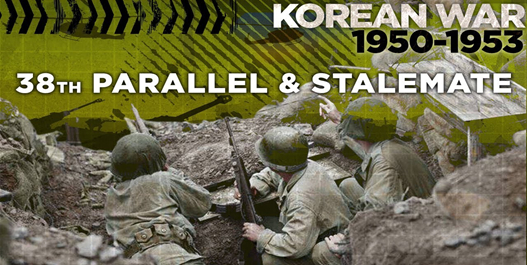
After World War II, the geopolitical tension of East Asia, especially the Korean peninsula became critical. The beginning of the Cold War between two different ideologies of Communism and Democracy was eventually visualised through the military conflict of the Korean War (1950-1953). The United Nations (UN) dispatched soldiers from sixteen countries as well as medical support from six nations. Then, what is the relationship between the United Nations and the Korean War? Which countries were involved in the war? What were the political and international issues? How was the war seen to outsiders? What kind of grassroots narratives did the soldiers, families and Koreans have?

The aim of this conference is to explore the involvement of the United Nations for ‘the Forgotten War’ through the various case studies of individual, group, or nation. The theme can be analyzed in a multidisciplinary approach of history, politics, anthropology, sociology, war strategy, human movement, medicine, refugee, POWs, Busan studies, unification policy, education, and human rights. If you are interested or your current research is on the subject or relevant to the Korean War, we invite your paper for the international conference in 2022.


Proposed streams:
  1. Policy of the UN for Korean War: The involvement of the United Nations (UN) to the Korean War was significant for South Korea (positively) and North Korea (negatively). How was the decision made so early? Who was involved in the process? How was the policy implemented internationally?
  2. Human Movements, POWs and Refugees: The war directly impacted the relocation of the local people (6.3 million).The waralso caused many POWs and refugees. How was the geographical landscape of the human movements? What was the situation of refugees? Were the POWs treated fairly?
  3. War Strategy and Battles: The various war strategies were applied at the battlers of the Korean War between the army, navy (the marine corps) and air force of China, Russia, UN, North and South Koreas. How was the strategy changed? What was the turning point for each other? Which battles were significant? What about the condition of retrogression?
  4. Narratives of Victims and Casualties (Soldiers and families): The war generated many victims (death and wound) which affected the emotional and mental condition of family members. What was the story of individual involvement? How do they remember the East Asian war? What is the post-war life of soldiers? Do they have any story in relation with Korean people?
  5. Human Rights and Welfare (medicine, orphans, and education): Under the military situation of the Korea war, there were the various activities of international, public and NGO organisations in the sphere of human rights. How was the medical service provided? How were orphans managed? Was any activity of education continued?
  6. Theory and Method in Unification and Peace Process: Since the Korean War has been 70 years and remained as an unfinished war, what kind of theory or method can be adopted for the development of Korean Unification? How can the peace process take a place for the future of both Koreas?

Proposals:

Please send your abstract or panel proposals to David W. Kim (davidwj_kim@yahoo.co.uk) including the following information:
  • Paper title
  • Nominated stream
  • Name and affiliation
  • Contact details (email)
  • Abstract of 150-200 words
  • Biography of 80 words highlighting teaching and research interests and publications (3-4 title and year only).
Proposals for panels of 3 or 4 papers must include the above information for all papers and a brief description of the panel itself of 100 words.


Key dates:
  • Proposal deadline: 15 June 2022
  • Notification: 30 July 2022
  • Registrations open: 05 August 2022
  • Registrations close: 30 August 2022
  • Conference: 21-24 October 2022

Registration fees:
  • Full-time scholar: $300
  • Student/ part-time and unwaged scholar/ audience: $250
  • Local Korean scholar: $200
  • Publishers and Bookshops: $400
Registration includes participation in all conference sessions, lunch, morning tea and afternoon tea on each day, conference dinner, registration pack, and post-conference tour (a half or one day). Publisher registration includes, in addition, a display desk, an opportunity to address conference delegates, and your logo on the conference program front page.


Bursary and Award:

There will be limited burary for some accepted doctoral candidates and early career researchers ($100-$300 each) as well as award for two best papers ($500 each). The bursary and award will be given away after conference.


Post-conference Publication:

The selected papers (in a blook volume) will be published by the Cambridge Scholars Publishing in UK.


Conference Committee:

(Chair) Asso. Prof. David William Kim (Australian National University and Kookmin University, Seoul)

(Co-Chair) Prof. Kiseob Kim (Director, Institute for Korean Unification, Pusan National University)

Research Prof. Jihyun Kim (Institute for Korean Unification, Pusan National University)


Contact:

Please address all inquiries to Dr. David W. Kim: davidwj_kim@yahoo.co.uk

CFP: INTERNATIONAL CONFERENCE ON LINGUISTICS, LITERATURE, ARTS, SOCIAL SCIENCE & HUMANITIES


International Conference on Education and Education of Social Sciences

which will be held in Bali, Indonesia on 3 May, 2021.


Scope & Benefits

Each Paper will be published in the Conference Proceeding with an ISBN No.

Each Paper will be assigned Digital Object Identifier (DOI) from Cross Ref.


Virtual/Online Conference

A convenient way of sharing and discussion.

1. Download Zoom App (Mobile/Notepad/Tablet)

ICEES Conference invites scholars, researchers, practitioners and students proposals to submit papers for paper presentations, interactive sessions, virtual talks or colloquia addressing one of the following tracks & topics.


Education:

Theory of Education | Assertive and Assistive Educational Technology | Comparative Education | Counseling | Cultural Literacy | Curriculum Studies

Social Science & Humanities: Refugees | Globalization | American Studies | African Studies | Asian Studies | European Studies | Middle Eastern Studies | Public Administration


Poster Presentation:

This event also accepts posters as an alternative to oral presentations. A special viewing and Q&A session will be held for presenters who had opted to use posters. Authors are expected to be present to answer questions or provide explanations to visitors during the session. All posters must come in A0 size i.e., 841mm x 1189 (portrait orientation). Please notify the event secretariat as early as possible if you need to use a different size or orientation to avoid any conference day difficulties.


Deadline:

29 de marzo de 2021

mail.ssrglobal@gmail.com

More information

CFP: THE HOLOCAUST AND ASIA: REFUGEES, MEMORY, AND MATERIAL CULTURE


The Holocaust and Asia: Refugees, Memory, and Material Culture

March 28–Wednesday, April 6, 2022


Application deadline: Monday, February 1, 2021

The Jack, Joseph and Morton Mandel Center for Advanced Holocaust Studies at the United States Holocaust Memorial Museum invites applications for a research workshop entitled The Holocaust and Asia: Refugees, Memory, and Material Culture. The Mandel Center will co-convene this workshop with Kimberly Cheng, Skirball Department of Hebrew and Judaic Studies, New York University, and Ran Zwigenberg, Asian Studies, History and Jewish StudiesPennsylvania State University. The workshop will take place at the United States Holocaust Memorial Museum’s David and Fela Shapell Family Collections, Conservation and Research Center

The workshop is scheduled for March 28–April 6, 2022. In the event that it is impossible to convene during those dates due to the Coronavirus pandemic, the workshop will be held in a hybrid format consisting of a series of short online sessions in advance of an in-person program convened at the Museum to be scheduled in the Summer of 2022.

In recent decades, the Holocaust has occupied an increasingly prominent place in Asian cultures of memory. Chinese intellectuals have called the Cultural Revolution their “Holocaust,” and both China and Japan have found and commemorated their own “Schindlers” (Ho Feng-Shan and Sugihara Chiune). Partition refugees in India/Pakistan have compared themselves to Jewish refugees, and memory activists across Asia have invoked Holocaust analogies in the region’s never-ending history wars. Yet the Holocaust’s impact on Asia was not just cultural. Many Asians witnessed the Holocaust firsthand, and tens of thousands of Jewish refugees fled through Asia. In Asia, these Jewish refugees appeared as poor white Europeans, challenging Asians’ conceptions both of the figure of the Jew and of the white man; both for Jews and Asians, their encounters with one another as racial others brought stark questions of identity, race, racism, gender, class, and colonial entanglements to the fore. Whether in the realm of exchange between refugees and local populations, or in mutual learning about the place of artifacts in commemoration, the circulation of material culture only served to deepen these divides.

Surveying the Holocaust-related myths and historical realities in Asia writ large (from China and Japan through Central Asia to Iran), this workshop explores Jewish and Asian involvement in the Holocaust and its memory. Our workshop examines the limits of the term “Holocaust” and its applicability across histories and cultures to account for the multifaceted ways the tragedy has reverberated beyond Europe. In doing so, we intend to delimit the existence of an Asian sub-field or an “Asian turn” within Holocaust studies.

To identify the main lines of inquiry of this burgeoning field, the workshop will consist of presentations and roundtable discussions led by participants along three thematic tracks: 1) the experiences of refugees, 2) Asian cultures of memory, and 3) material culture. Daily sessions will be led by participants, as well as discussions with Museum staff and research in the Museum’s collections. The workshop will be conducted in English.


How to Apply

Applications are welcome from scholars affiliated with universities, research institutions, or memorial sites and in any relevant academic discipline, including anthropology, archeology, art history, Asian studies, Eastern European and Eurasian studies, genocide studies, geography, history, Jewish studies, law, literature, Middle Eastern studies, philosophy, political science, psychology, sociology, religion, Romani studies, and others. Applications will be accepted from scholars at all levels of their careers, from PhD candidates to senior faculty. Scholars working in Asian academies, as well as scholars from underrepresented backgrounds in the field, are particularly encouraged to apply.

The Mandel Center will reimburse the costs of round-trip economy-class air tickets to/from the Washington, DC metro area, and related incidental expenses, up to a maximum reimbursable amount calculated by home institution location, which will be distributed within 6–8 weeks of the workshop’s conclusion. The Mandel Center will also provide hotel accommodation for the duration of the workshop. Participants are required to attend the full duration of the workshop.

The deadline for receipt of applications is Monday, February 1, 2021. Applications must include an abstract of no more than 300 words outlining the specific project that the applicant is working on, plans to research, and is prepared to present during the program; and a short bio. The application form.


Museum Resources

The Museum’s National Institute for Holocaust Documentation houses an unparalleled repository of Holocaust evidence that documents the fate of victims, survivors, rescuers, liberators, and others. The Museum’s resources include approximately 110 million pages of Holocaust-related archival documentation; library resources in over 60 languages; hundreds of thousands of oral history, film, photo, art, artifacts, and memoir collections; and the Holocaust Survivors and Victims Database, which contains about 11.5 million name records and over 44,000 list records. In addition, the Museum possesses the holdings of the International Tracing Service (ITS), which contains more than 200 million digitized pages with information on the fates of 17.5 million people who were subject to incarceration, forced labor, and displacement as a result of World War II. Many of these records have not been examined by scholars, offering unprecedented opportunities to advance the field of Holocaust and genocide studies.


The Museum’s Asia-related collections include:

Participants will have access to both the Museum’s downtown campus and the David and Fela Shapell Family Collections, Conservation and Research Center. To search the Museum’s collections, please visit the collections catalog.


For More Information

Direct questions to Krista Hegburg, PhD, Senior Program Officer, International Academic Programs Division, Jack, Joseph and Morton Mandel Center for Advanced Holocaust Studies, at khegburg@ushmm.org.

This Call for Applications.

CFP: 2019 SITUATIONS INTERNATIONAL CONFERENCE ETHNICITY, RACE AND RACISM IN ASIA


2019 Situations International Conference Ethnicity, Race and Racism in Asia


When: Thursday 24 October-Saturday 26 October 2019

In recent years, the questions of ethnicity, race and racism have come to assume an increasing prominence in scholarly as well as social discussions in Asia. In response to the turbulent global economy, the fracturing of international barriers, and a renewed surge in flows of migrants and displaced persons worldwide, national populist movements have suddenly become a potent and growing political force. Longstanding liberal values such as pluralism, tolerance, and multicultural coexistence have come under challenge, as fears of economic crisis and cultural conflict have given strength to extremist stances across the political spectrum. Finally, the fact that historical barriers have come down between different population groups has resulted in some cases in the intensification of conflicts between them over other explosive fault-lines, such as differences of religious belief that too can take on a racial or ethnic dimension.

The current rise of populist anger across the West portends a potential revival of the nation- state, which has often had a relatively homogeneous population as its foundation. Alternatively, the fragmentation of social and political systems may indicate a return to older institutional arrangements that could be surprisingly peaceful and tolerant compared to modern multi-ethnic or multi-cultural states because they were more willing to recognize hard cultural differences. What kind of relationship between the old and the new are we likely to see as the nations and cultures of Asia attempt to adjust to new social and economic realities?

In the Asia of today, what does ethnic diversity and pluralism mean? What kind of impact has globalization had on the relations between different ethnic groups in multi-ethnic states such as Malaysia, Singapore, and Indonesia? What kinds of conflicts—as well as new modes of coexistence—are being generated by the flow of peoples in accordance with the demand for labor and patterns of investment? How are more ethnically homogeneous nations such as Japan, China, South Korea, and Japan affected by this dynamic? Are there already signs of impending change in these latter, more socially homogeneous, societies?

In exploring this topic, the 2019 Situations conference welcomes papers on such subjects as:
  • The history of race and ethnicity as Asian ideas
  • Non-Western models of pluralism and diversity
  • Refugee flows and crises around the globe
  • Racial divides and religious differences
  • Diaspora and identity
  • Race, equality, and democracy
  • The future of cosmopolitanism • Race and models of beauty
  • Race, culture, and the high-trust society
  • Multiculturalism, pluralism, and empire
  • Race, ethnicity, and biomedical technologies
  • Belonging and exclusion
  • Flows of labor and capital
  • Challenges to multiculturalism


Among our confirmed keynote speakers are:


[Guidelines]
  1. Early inquiries with 200-word abstracts are appreciated. The deadline for a 4,000-word presentation is September 1 2019.
  2. Please include a Bio-Statement with your original submission, your affiliation, and a viable email address. All submissions should follow the Chicago Manual of Style (16thed.). Endnotes recommended. Refer to http://situations.yonsei.ac. kr/sub03/sub01.php.
  3. Each invited participant is expected to turn his or her initial presentation into a 6,000- word paper for possible inclusion in a future issue of the SCOPUS-indexed journal, Situations: Cultural Studies in the Asian Context (http://situations.yonsei.ac. kr).
  4. We will provide hotel accommodation for each invited speaker. Upon acceptance of the proposal, a partial defrayment of the airfare will be available (while funding lasts).
  5. All correspondence should be addressed to Terence Murphy, Editor attmurphy@yonsei.ac.kr and cc’d to Rhee Suk Koo, Managing Editor atskrhee@yonsei.ac.kr.


 http://situations.yonsei.ac.kr

 attmurphy@yonsei.ac.kr