Mostrando entradas con la etiqueta series. Mostrar todas las entradas

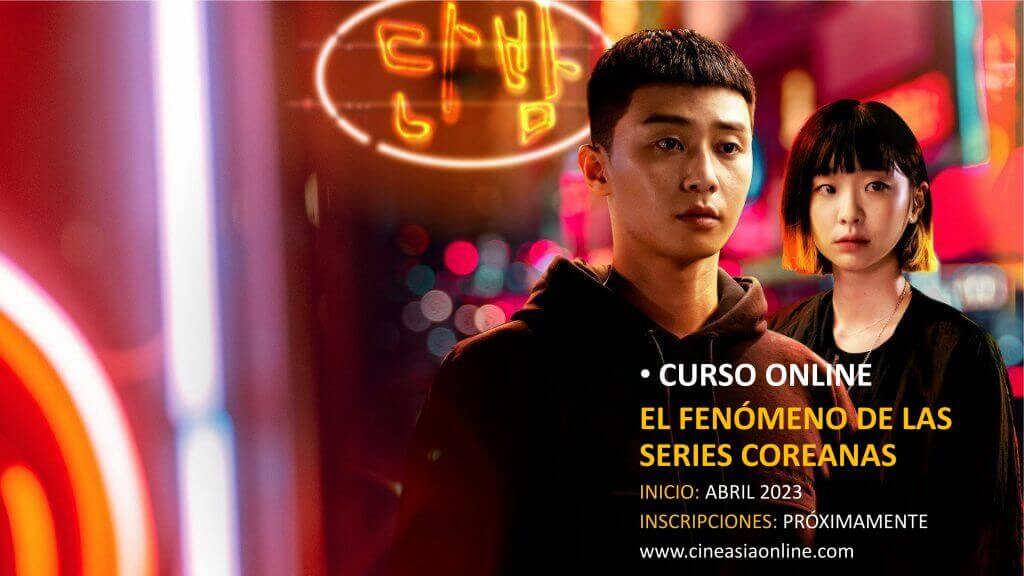
CURSO ONLINE CINEASIA: EL FENÓMENO DE LAS SERIES COREANAS


Curso online CineAsia

El fenómeno de las series coreanas


Sí, ya está aquí, el curso que todas/todos nos habíais pedido tiene estructura y fecha de inicio. El estreno está previsto para el 17 de abril de 2023. El nuevo curso online de CineAsia que lleva por título ‘El fenómeno de las series coreanas’ analiza los k-dramas y el porqué del impacto mediático de las mismas a nivel internacional. Un recorrido histórico, que analizará desde las series de mayor éxito, los géneros, las agencias de talentos, la metodología de trabajo, la importancia de las guionistas…

De Winter Sonata a Itaewon Class, embárcate en el nuevo viaje que te propone CineAsia con el curso online ‘El fenómeno de las series coreanas un viaje de 20 horas (diez sesiones) por el mundo de la televisión y las series en Corea del Sur.


Ficha técnica:
  • Duración: del lunes 17 de abril al lunes 26 de junio
  • Horas: 20 horas (repartidas en diez sesiones)
  • Sesiones: (1 sesión a la semana) 2 horas de duración los lunes de las 19h a las 21h
  • Modalidad: online (a través de la plataforma Zoom)
  • Precio: 120 € / Alumnos que ya han realizado la preinscripción: 100 €
  • Descuento con carnet de estudiante: Todos los estudiantes tendrán un descuento de 20€ en la inscripción al curso.
  • Certificado del curso: Todos los alumnos que superen el 60% de las clases y que lo soliciten recibirán un certificado final del curso expedido por CineAsia.


Sesiones:
  • CLASE 1 – 17 DE ABRIL
“Presentación del curso y su metodología. ¿Por qué un curso sobre las series coreanas?”

Presentaremos el curso, su funcionamiento y también una introducción al “fenómeno de los K-dramas”: ¿por qué un curso sobre series de Corea del Sur? Hablaremos de su impacto mediático y cultural a nivel internacional.

  • CLASE 2 – 24 DE ABRIL
“El soft power coreano: la ola HALLYU”

Analizaremos qué es el llamado ‘poder blando’; la evolución de la ola hallyu coreana (cuándo y cómo empezó todo, su transversalidad, la evolución de las audiencias…). Trataremos también de reconocer los rasgos tanto positivos como negativos de la ola coreana.

  • CLASE 3 – 8 MAYO
“La industria de la TV coreana y sus políticas”

Un poco de historia sobre las cadenas de TV en Corea del Sur: canales públicos y privados, plataformas… También sus políticas publicitarias y de censura, así como cuándo y dónde se emiten los K-dramas y qué tipo de ellos se programan en cada cadena.

  • CLASE 4 – 15 MAYO
“La producción de las series coreanas”

¿Cómo se hace/se produce una serie en Corea? Metodología de trabajo, interacción con el fandom y la realidad del país; evolución de los géneros; cómo trabajan los directores, guionistas, actores… Un paseo por la “industria” de los K-dramas.

  • CLASE 5 – 22 DE MAYO
“Guionistas y directores más reconocidos de la industria de los K-dramas”

Es curioso cómo en la industria de los K-dramas, las figuras más reconocidas son los guionistas y, sobre todo, guionistas mujeres. Esto está cambiando en los últimos años y analizaremos por qué. Hablaremos las/los guionistas y directores más famosos, y de sus más famosas.

  • CLASE 6 – 29 DE MAYO
“Breve historia y evolución de los k-dramas en la TV coreana”

¿Cuándo empiezan a hacerse series en la TV de Corea? ¿Cómo empezó todo? Haremos un poco de historia sobre las más reconocidas series desde los años ’60-‘70s hasta llegar al “boom” que se produjo al principio del Nuevo Milenio y las series que lo iniciaron todo (Winter Sonata, Escalera hacia el cielo, Boys Over Flower, La joya de palacio, etc).

  • CLASE 7- 5 JUNIO
“Los ‘saeguk” y la historia de Corea”

Al hablar de la famosa serie “La joya de palacio”, nos da pie a realizar un recorrido por la historia pre-siglo XX de Corea: sus reinos, reinados, reyes a través de las series coreanas… Los llamados “saeguk”.

  • CLASE 8 – 12 JUNIO
“La historia de Corea: el Siglo XX en K-dramas”

Seguiremos hablando de la evolución de los K-dramas y de cómo estos han reflejado muchas veces la historia del país (colonialismo japonés, Guerra de Corea, dictadura, consecución de la democracia, crack económico 1997, hechos concretos sociales, etc).

  • CLASE 9 – 19 JUNIO
“K-dramas en clave de género”

Hablaremos de cómo los K-dramas reflejan a la mujer y al hombre: estándares de belleza femenina desde el Confucionisto a las “Gangnam Beauty”, las nuevas “masculinidades”, etc. Veremos cómo ha evolucionado en los K-dramas el tratamiento de las temáticas de género.

  • CLASE 10 – 26 JUNIO
“La globalización de los K-dramas”

Veremos cómo las plataformas (Netflix, Disney, etc.) han cambiado el panorama audiovisual y cómo se han beneficiado de ellas la industria de las series coreanas ampliando audiencias, globalizándose y cambiando también “su estilo y sus temáticas”. Para finalizar intentaremos sacar algunas conclusiones (tanto positivas como negativas) del fenómeno.

CFP: EDITED VOLUME "FAIRYTALE IN EAST ASIAN FASHION"


Fairytale in East Asian Fashion (edited collection)


We are soliciting chapter proposals for an edited collection on Fairytale in East Asian Fashion. Stories of yokai (Japan), yogoe (Korea), or yaoguai (China), such as “The Crane Wife” and “The Robe of Feathers,” manifest themselves everywhere in East Asian popular culture these days—from manga, anime / donghua / webtoons, and Pokémon, to fashion. One sees this phenomenon through brands such as Maison Kitsune, yokai-themed collections, street style, cosplay, and of course, traditional ethnic dress. Chapters may cover any fairytale or any fantastical creature that features strongly in Asian fairytale—baku, dokkaebi, kappa, kitsune / huli jing / gumiho, qilin, yuki onna, etc etc. Essays on Chinese and Japanese fashion are particularly needed, but essays on Southeast Asia are also quite welcome. (The editor is writing on yogoe fashion through K-Pop and K-Drama.)

Please send a brief c.v. and 150-200 word abstracts for 6,500 word chapters by June 30, 2023 to Amanda Sikarskie, Ph.D., asikarsk@umich.edu. Dr. Sikarskie is working with Frances Arnold, Acquisitions Editor at Bloomsbury. If selected, finished chapters will be due in early 2024.

CURSO CASA ASIA: «RELATOS FOLCLÓRICOS COREANOS Y SU ADAPTACIÓN EN LAS SERIES COREANAS»


Curso online Casa Asia:

«Relatos folclóricos coreanos y su adaptación en las series coreanas»


Si te gustan las series coreanas y quieres saber de dónde vienen esas historias, este curso será para ti. El relato folclórico es un género literario de Asia Oriental que significa historia hablada antes de ser escrita y se compone de mitos, leyendas y cuentos populares. En la era digital, varios relatos folclóricos se han convertido en diversas formas de contenidos culturales. En el caso de las series se puede maximizar la imaginación literaria del relato folclórico a través de la pantalla, para que el público conozca fácilmente estas narrativas.

En este curso, abordaremos los relatos tradicionales como fuente de inspiración para las series coreanas. Además, podrás descubrir el abanico de posibilidades que ofrece la reinterpretación moderna de relatos folclóricos en los contenidos culturales contemporáneos.

No es necesario tener conocimientos previos, por lo que esta actividad puede ser interesante tanto para quienes disfrutan con las series surcoreanas como para aquellos que desean comenzar a conocer las narrativas folclóricas coreanas.


Programa

1ª sesión: La historia del Gumiho y My Girlfriend is a Gumiho (내 여자친구는 구미호, 2010)

El gumiho, un zorro de nueve colas, es una de las criaturas clásicas más famosas en Corea. Hasta ahora, el gumiho se ha tratado más en el género de terror, pero en My Girlfriend is a Gumiho se le trata como un ser adorable. En esta sesión, veremos la historia de gumiho y nos centraremos en cómo lo ha reflejado la serie.

2ª sesión: La leyenda de Arang y Arang y el Magistrado (아랑사또전, 2012)

La leyenda de Arang es una historia de la región Miryang en la que sucede el asesinato injusto de una mujer. El espíritu de la víctima vuelve para resolver el asunto, lo que otorga al relato características detectivescas y fantásticas. El año 2012 llega a la pequeña pantalla la serie Arang y el Magistrado. En esta adaptación, se combina la leyenda de Arang con la historia del magistrado Kim Eun Oh, dando tintes de amor y traición a la trama.

3ª sesión: La historia del Dokkaebi y El goblin: El dios solitario y grande (쓸쓸하고 찬란하神 도깨비, 2016)

Dokkaebi es uno de los personajes más interesantes del relato folclórico coreano. Los cuentos sobre dokkaebi son muy diversos y familiares, por lo que tanto niños como adultos pueden disfrutarlos. En esta serie se recrea el dokkaebi más atractivo de la historia de Corea. Durante esta sesión analizaremos las características de El goblin, que ha estado en auge no solo en Corea sino también a nivel internacional. A través de varios relatos descubriremos el encanto de dokkaebi como la fuente primaria.

4ª sesión: La historia del Hada y el leñador y Mamá Hada y el leñador (계룡선녀전, 2018)

Por interesante que sea la historia de Hada y el leñador, es probablemente uno de los relatos más criticados desde la perspectiva de género hoy en día. En línea con el propósito de releer cuentos folclóricos, esta historia, tratada con diversos contenidos culturales, se convirtió “nuevamente” primero en un webtoon y después en una serie. En esta clase, veremos cómo “adecuar” un relato folclórico como fuente primaria desde un punto de vista contemporáneo y analizaremos el nuevo significado.

5ª sesión: La historia de la Princesa Pyeonggang y River Where the Moon Rises (달이 뜨는 강, 2021)

En la última sesión terminaremos con la historia de la princesa Pyeonggang, que junto con Ondal son figuras reales en la historia de Corea. Durante mucho tiempo la princesa ha tomado la figura de ‘esposa ideal’ dado que rescató al inocente Ondal y le convirtió en un general valiente. Sin embargo, la novela Princesa Pyeonggang recrea la historia de ella tratándola como el personaje principal. Gracias a la imaginación literaria de dicha novela, en la que además se inspira la serie River Where the Moon Rises, podemos viajar a un mundo más dinámico y creativo de la historia inédita de la pareja.


Profesora

Chaeyeon Park es profesora asociada de Estudios Coreanos en la Universidad de Salamanca y profesora de coreano en el Centro Superior de Idiomas Modernos (CSIM) de la Universidad Complutense de Madrid. Es licenciada en Estudios de Enseñanza de la Lengua Coreana por la Cyber University of Korea y en Lengua y Literatura Española y Máster en Literatura Hispanoamericana en la Korea University. Dispone del certificado oficial de profesora de lengua coreana.

CFP: EDITED VOLUME FOR BLOOMSBURY SERIES IN ASIAN CELEBRITY AND FANDOM STUDIES


‘Star and Celebrity Branding within Asia: Using Comradery Capital’

edited volume for Bloomsbury Series in Asian Celebrity and Fandom Studies


The centrality of the celebrity commodity to the flow of cultural and economic capital in mediascapes has been explored by scholars such as Driessens and Marshall who note that celebrities are “manufactured by the celebrity industry” (Driessens, 2012, p. 643), and a mechanism to sell products. Marshall notes that the “celebrity as public individual who participates openly as a marketable commodity serves as a powerful type of legitimation of the political economic model of exchange and value – the basis of capitalism – and extends that model to include the individual (2014 [1997], p. xlviii).

In a recent publication, Celebrity Bromances (Routledge, 2022), we engage with the notion of the celebrity commodity, expanding Driessens’ celebrity capital to the dynamics of celebrity relationships. Driessens outlines how celebrities become part of the currency in a commodity culture, amassing capital that can be traded for profit to the benefit of the celebrity or affiliated products. Celebrities are therefore seen as cultural commodities (Marshall, 2014; Driessens, 2012, 2013); products of culture that contain value which can be traded for economic capital.

The commodification of celebrity interactions is a lens through which celebrity bromances are explored. We suggest that a “bromance capital” operates in contemporary celebrity culture, wherein the bromance is not only used as a tool to draw attention to individual celebrity figures. It also becomes a cultural “product” which gains value as a consequence of the affective attachments it provokes. Expanding the discussion beyond male homosocial intimacy, we also propose the concept of comradery capital, which is inclusive of group dynamics and functions across genders. Comradery capital refers to inherent value of the presentation of celebrity friendships and how these are utilised for the promotion of movies, television shows, charities, and products. The capital can fluctuate depending on levels of authenticity and how the relationship is performed.

While Celebrity Bromances explored some examples of comradery capital, these examples originated mostly from Hollywood celebrity culture. In our efforts to explore the operation of comradery capital, we wish to examine the various readings of comradery capital across countries in Asia. For example, The Avengers cast promotes their dynamic and films in interviews across Asian countries. Similarly, the way Gal Gadot and Chris Pine perform their friendship in the promotion of the Wonder Woman films or Chris Hemsworth and Tessa Thompson for Men In Black International.

We would like to capture cultures from around Asia including Japan, Korea, Dubai, Lebanon, India, China, Iran, Singapore, Pakistan, Malaysia, Israel and Indonesia. In examining the way comradery capital is performed and perceived in these various regions, the book would be able to capture the way in which celebrities vary their performances of friendship to take into account cultural differences of acceptable physical contact, understanding of language and slang, and the reading of sexuality and gender. It will also examine how comradery capital is a global promotional tool, breaking the barriers of communication.

We welcome contributions that focus on the political economy of comradery capital, as well as the affective/empowering dimensions of comradery capital, including fan and consumer relations.

We encourage interested authors to review definitions of bromance and comradery capital in Celebrity Bromances by accessing the open access chapters at the below links. We encourage an engagement with these concepts in abstracts submitted.


Chapter 5 – Beyond Bromances


Topics could include, but are not limited to:
  • Promotion of Hollywood films in Asian contexts
  • Reception of Hollywood cast dynamics in Asian contexts
  • The creation and presentation of cast dynamics in Asian contexts, including same and mixed gender (binary and non-binary) casts
  • The reception of regional cast dynamics in Asian contexts
  • Creation and reception of joint or group celebrity persona

Submission

Please send the following to the editors at: cjcelebrityresearch@gmail.com by April 1, 2023:
  • 300-word abstract
  • 100-word bio
  • 5-6 key words

Contact

cjcelebrityresearch@gmail.com


Anticipated timeline
If the proposal is accepted, full chapters would be expected by November 2023.

CFP: ASIAN POPULAR CULTURE AND THE GOTHIC


Asian Popular Culture and the Gothic


Article proposals are welcome for an upcoming collection on Asian Popular Culture and the Gothic, edited by Li-hsin Hsu, Deimantas Valančiūnas and Katarzyna Ancuta. The collection is planned for submission to the Routledge Advances in Popular Culture Studies series.

Popular culture is often described as “the culture of the people,” containing cultural elements related to objects, beliefs, and practices that embody shared social meanings, and regularly produced for and consumed by mass audiences. As an object of investigation, it is mostly conceived of as a study of cultural products and media, such as literature, film, television, radio, games, comics, digital media, or fashion, that have mass accessibility and appeal. In today’s globalised world, more than ever, popular culture is increasingly diverse, expansive, dynamic, mobile, and often transnational, regardless of its point of origin.

In their introduction to the special Asian issue of The Journal of Popular Culture, published in 2016, Lisa Funnel and Yuya Kuchi remonstrate that in popular and critical imagination, “Asian Popular Culture” tends to be limited to selected East Asian genres and media, such as Japanese manga and anime, or Chinese martial arts films (2016, p. 963). Today we can safely add Korean music and television drama to this list but this does not quite change the fact that while we have seen dozens of publications focused on East Asian pop culture, large areas of popular Asian cultural production remain routinely excluded from scholarly examinations. While South Asian popular culture studies are a relatively vibrant discipline, even if the investigation here tends to be focused mostly on India and rarely goes beyond the study of popular cinema, Southeast Asian pop culture, in contrast, has so far received very limited attention, with studies examining the impact of “Japanisation” or Korean wave outshining those on local production. The field of Asian popular culture and its connection to the Gothic remains also an under-examined area.

Recent scholarship on the Gothic has extended the analysis of cultural production beyond the usual references to literature and cinema, and often includes a variety of media forms and practices of public/popular culture, such as television, video games, music, fashion etc. The term has also transcended not only its generic and historical, but also geographical boundaries, becoming a truly transnational phenomenon. The contemporary Gothic manifests in a variety of media forms way beyond the European or American contexts, and the appearance of Asia in the Gothic-related debates is not an oddity anymore. The ongoing decentralisation of Gothic studies and de-westernisation of its methodologies has opened up new possibilities for including cultural productions from diverse geographical locations, and the willingness to accept Asian Gothic as a legitimate category has rapidly increased with most edited collections and companions now carrying at least one chapter discussing Asian texts and contexts.

Asia has long been regarded as a vital hub of production and consumption of popular culture, with an extensive variety and spectrum of media forms and topics. However, the Gothic aspect of popular culture of Asia has not been addressed in a systematic and extensive way. Therefore, this collection for the first time invites papers to explore the ways Gothic manifests in popular culture and its consumption in Asia. By the term “popular culture” we imply both a variety of media forms of everyday consumption – video and digital games, comic books, television, music etc., as well as forms of everyday public culture and practices, associated with festivals, fashion, rituals, ceremonies etc. We also invite papers that explore the issues of knowledge production and cultural reception in Asia, rethinking the social and political role the Gothic might play in the circulation and transmission of popular culture in an Asian context, and how Asian popular culture might redefine or reshape the Gothic mode / aesthetics as we know it.

We invite proposals that consider the Gothic not as a fixed western-centred generic category, but as a fluid and shifting conceptual framework through which distinctive local cultural practices, historical and social traumas, anxieties, collective violent histories and diverse belief systems are expressed and discussed. In this sense, the Gothic can be read as a distinctive aesthetical and narrative practice, where conventional gothic tropes and imagery (monsters, ghosts, haunting, obscurity, darkness, madness etc.) are assessed anew, and disseminated and consumed through the many forms of popular culture. We also encourage approaches that rethink the affective power of the Gothic, and how its heterogeneous, transmedia, transcultural and transnational complexity is manifested in Asian contexts.

We are interested in examining a number of broader issues highlighting the appropriation of Gothic tropes and conventions in popular culture texts that engage with representations of colonial legacy, wars, conflicts, and historical trauma, gender / class / race issues and various forms of social critique. We would like to encourage the examination of the relationship between popular Asian Gothic texts and the audience / the marketplace, as well as the contexts of production and reception of such texts. We are keen on receiving proposals exploring the connection between Asian Pop Gothic and authorship / celebrity culture and possible political contexts related to the use of popular Gothic themes and motifs, for instance in relation to propaganda and censorship.

Below is a list of themes the edited collection is willing to address. It is not an exhaustive list and is intended as a guide, not as a set of limitations. We welcome suggestions and proposals on related topics and various media forms.
  • Gothic/Horror elements in B-movies and popular cinema (e.g., HK Cat III movies, Ramsay Brothers horror films, Japanese splatterpunk and tokusatsu eiga)
  • Popular Asian gangster films (e.g., the Japanese yakuza/ninkyo films, HK Triad films, or Korean kkangpae films)
  • Horror comedies / comic Gothic
  • Gothic/Horror elements in popular / pulp fiction (e.g., supernatural romances, light novels)
  • Popular Asian crime fiction (e.g., honkaku and henkaku mysteries, or gong’an crime-case fiction.
  • Asian horror television series and game shows
  • Serial killer television series
  • Mediums, shamans and ghost detectives in supernatural crime procedurals
  • Gothic cyberpunk / post-human in manga and anime
  • Eco-Gothic approaches to manga and anime
  • Horror comics in Asia
  • Asian ghosts and monsters in popular culture
  • Sentimentalism and sensationalism in Asian ghost story
  • Asian pop culture adaptations of Gothic texts (e.g., Dracula in Asian texts, Japanese reworkings on Chinese zhiguai, Rebecca in India)
  • Vampires in Asian music videos
  • Visual Kei and post-punk / Goth music
  • Gothic/Horror elements in Asian heavy metal music
  • Gothic/Horror and gaming cultures
  • Survival video games and survival game films and TV shows
  • Horror-themed RPGs and ARGs inspired by Asian folklore
  • Gothic/Horror themes in user-generated fiction and Internet-based lore
  • Ghosts, curses and viral videos
  • Ghost-hunting and paranormal radio broadcasts / podcasts
  • Gothic/Horror in popular theatre (e.g., kabuki plays, likay, Chinese/Taiwanese opera, Tamasha, Jatra)
  • Gothic/Horror in puppet theatre (e.g., budaixi, nang yai, wayang kulit, kathputli)
  • Gothic traditions and (religious) festivals
  • Asian Gothic folklore and urban lore
  • Ghost storytelling and oral lore
  • Asian Horror fandom and audiences
  • Gothic Lolitas and Gothic cosplay
  • Asian Goth subcultures / Gothic fashion
  • Gothic/Horror-themed merchandise
  • Gothic/Horror-themed attractions (e.g., haunted houses, amusement parks, escape rooms)
  • Ghost tours and dark tourism
  • Gothic media personalities / TV and radio hosts
Proposals of approx. 300 words accompanied with a short biographical note of max. 150 words should be sent to the editors at asianpopgothic@gmail.com by 31 October 2022.


Contact email: kancuta@gmail.com

CURSO ONLINE CASA ASIA «EL ÉXITO GLOBAL DEL CINE Y LAS SERIES DE COREA DEL SUR»

 
Curso online Casa Asia

«El éxito global del cine y las series de Corea del Sur»


¿Cuáles son las claves del éxito que están cosechando el cine y las series de Corea del Sur? En este curso realizaremos un repaso histórico a estas industrias culturales a partir de la estrategia globalizadora llevada a cabo por el país desde los años 90. A través de este recorrido, recordaremos algunos hechos históricos que marcaron para siempre a estas industrias y, muy especialmente, esas películas y series que han sido importantes para la evolución de la cultura contemporánea de Corea del Sur, permitiéndonos comprender, de esta manera, cómo ha sido la trepidante estrategia de expansión que se ha producido en estos últimos 25 años.

No es necesario tener conocimientos previos, por lo que esta actividad podría ser interesante tanto para quienes disfrutan con la ficción surcoreana como para quienes desean comenzar a conocerla.


Programa:

1ª Sesión: Los inicios de la globalización: el nuevo cine coreano

Desde los años 90, la industria del cine de Corea del Sur experimentó importantes cambios que tuvieron su base en el plan Segyehwa anunciado por primera vez en 1995 por el antiguo presidente Kim Young-Sam. Los efectos de la globalización se vieron reflejados en una nueva ola de cine que acabaría conociéndose entre la crítica especializada y el público como el “Nuevo Cine Coreano”. La Generación 386 de cineastas, encabezados por Bong Joon-ho, Park Chan-wook, Kim Jee-woon, Lee Chan-dong, Kim Ki-duk y Hong Sang-soo, obtuvo, de forma inesperada, el mayor reconocimiento internacional.

2ª Sesión: Las últimas tendencias del cine surcoreano

La consolidación de la Generación 386, la proliferación de los nuevos talentos o la experimentación con los géneros cinematográficos han consolidado la presencia del cine surcoreano en el panorama internacional. Así pues, éxitos como Parásitos (Gisaengchung, 2019), de Bong Joon-ho, han permitido dar a conocer a esta cinematografía al público masivo, pero también responden a una estrategia de expansión que comienza a cosechar frutos.

3ª Sesión: Evolución de las series de ficción surcoreanas

La década de los 90, trajo consigo el surgimiento de nuevos canales en la televisión por cable, pero también un incremento en la competitividad en su apuesta por la ficción local. Tras las importantes ventas de la serie What is Love? (Sarangyi Mwogilrae, Park Cheol, 1991-1992) y la consolidación de la ficción surcoreana en la región con Winter Sonata (Gyeoul yeonga, Yun Seok-Ho y Lee Hyung-Min, 2002), los medios de comunicación chinos y japoneses comenzaron a utilizar el término Hallyu para definir el impactante éxito y dominio que aún, a día de hoy, mantiene esta industria.

4ª Sesión: La ficción surcoreana en las plataformas digitales

Por último, finalizaremos nuestro recorrido histórico dedicando una última sesión a la presencia de la ficción surcoreana en las plataformas digitales. Desde 2016, con la participación de Netflix en la superproducción de Okja, de Bong Joon-ho, se ha producido un incremento exponencial en la visibilización del cine y las series de factura surcoreana. De esta forma, se ha facilitado su circulación a escala global, pudiéndose tener acceso a una gran variedad de contenido desde nuestras propias casas.


Profesora:

Sonia Dueñas Mohedas, becaria predoctoral PIPF en el departamento de Comunicación de la Universidad Carlos III de Madrid y miembro del grupo de investigación TECMERIN (Televisión-Cine: Memoria, Representación e Industria). Ha sido becaria Korea Foundation Field Research en la Korea National University of Arts en 2021. Su tesis está centrada en Planet Hallyuwood, la industria cinematográfica de Corea del Sur en la era de la globalización, labor que también combina con el proyecto de investigación «Cartografías del Cine de Movilidad en el Atlántico Hispánico» (CSO2017-85290-P) y la docencia. Es miembro fundador de la Asociación de Difusión de Estudios y Cultura Coreana en España (ADECCE).


Más información
  • Fechas: del 4 al 7 de julio de 2022. Lunes a jueves, de 18.00 h a 19.30 h CEST. 4 sesiones de 1,5 horas: total 6 horas.
  • Lugar: Online. 24 horas antes del acto las personas inscritas recibirán la información necesaria para acceder.
* Comprueba tu bandeja de correo no deseado en caso de no haberla recibirlo.
  • Precio: 39 euros.


WEBINAR «LITERATURA COREANA EN ESPAÑA: ¿ACTOR SECUNDARIO DE BTS, SOLO LEVELING Y EL JUEGO DEL CALAMAR?»


«Literatura coreana en España: ¿actor secundario de BTS, Solo Leveling y el Juego del Calamar?»

Webinar; II Ciclo de Conferencias: Estudios Globales de Asia Oriental


Corea está consolidando su papel como potencia cultural en música, cómic y series, alcanzando una presencia popular. Pero, ¿alcanza este boom a la literatura? En este segundo webinar del II Ciclo de Conferencias: Estudios Globales de Asia Oriental se analizará la situación actual de la literatura coreana en España y en español.

A través de un programa de conferencias impartidas por destacados especialistas del Programa de Estudios de Asia Oriental de la Universidad Autónoma de Barcelona, el II Ciclo de Conferencias: Estudios Globales de Asia Oriental analiza las dinámicas sociales, culturales, políticas y económicas que emergen desde Asia Oriental y que influyen en el resto del mundo, convirtiendo esta área en el motor más dinámico de la globalización.

El ciclo está organizado por el Máster Oficial en Estudios Globales de Asia Oriental de la Universidad Autónoma de Barcelona (UAB) y por Casa Asia, con la colaboración del grupo de investigación GREGAL (UAB).

El Máster Oficial en Estudios Globales de Asia Oriental de la UAB es un máster pionero en la formación de profesionales expertos en las interacciones socioeconómicas, político culturales y medioambientales con Asia Oriental, y ofrece una formación interdisciplinar, conectada con el entorno profesional internacional.

Presenta:

Rafael Bueno, director de Política, Sociedad y Programas Educativos, Casa Asia

Modera:


Conferencia a cargo de:

Dra. Ester Torres Simón, lectora Serra Húnter UAB, Doctora en Traducción y Estudios Interculturales por la Universitat Rovira i Virgili de Barcelona (URV) y licenciada en Traducción e Interpretación (inglés, japonés) por la UAB. Tras haber sido docente en la Chonbuk National University (República de Corea), la Universidad de Yonsei (República de Corea), la Universidad Europa del Atlántico, la URV y profesora colaboradora en la Universitat Oberta de Catalunya, actualmente es profesora de coreano en la UAB y centra su investigación en la circulación de literatura coreana y la traducción indirecta.

Sigue el acto en directo aquí.

Consulta el ciclo completo aquí.
  • Fechas: Jueves 19 de mayo a las 18.00 h CEST
  • Lugar: Online. 24 horas antes del acto las personas inscritas recibirán la información necesaria para acceder. Comprueba tu bandeja de correo no deseado en caso de no haberla recibirlo.
  • Precio: Actividad gratuita.

CFP: “GLOBAL CONTENT PROVIDER: KOREAN FILM AND TV DRAMA AS INDUSTRY AND ENTERTAINMENT”, 2022 SITUATIONS INTERNATIONAL CONFERENCE


“Global Content Provider: Korean Film and TV Drama as Industry and Entertainment”,

2022 Situations International Conference

21-22 October 2022, Jeju, South Korea


Right now, a lot of eyes are focused on Korea. In 2020, Bong Joon-ho’s Parasite became the first non-English-language film to win Best Picture at the Academy Awards. Soon after, its director called for film audiences to overcome the “one-inch-tall barrier of subtitles.” Two years later, Hwang Dong-hyuk’s Squid Game (2021) became the top Netflix show in 90 countries, garnering over 111 million fans. Although these two massive hits might appear to have come out of the blue, the ascent of Korean drama to worldwide acclaim did not happen overnight. For decades, televisual K-dramas have been popular in major sites in Asia, ranging from Japan to Saudi Arabia; since the end of the 1990s, Korean films become featured more regularly at some of the major international film festivals. Korean films that won prizes at Cannes and Venice, including Park Chan-wook’s Oldboy (2003), Lee Chang-dong’s Secret Sunshine (2007) and Kim Ki-duk’s Piéta (2012) not only won over cinephiles but worked in tandem with popular dramas like Lee Byung-hoon’s Daejanggeum (2003) to spark interest in Korean culture as a whole.

Against the backdrop of the critical success and popular acclaim of Korean films and drama, this interdisciplinary conference invites papers that explore the range of themes and topics connected to the South Korean film and TV industry. We are interested in papers that explore both the infrastructure of the Korean entertainment industry and in the Korean dramatic forms dependent on screenplay and telescript. The following topics are listed as mere suggestions; in practice, we welcome a full range of papers, including papers that offer perspectives that differ, and even differ sharply, from the dominant liberal or progressive consensus in cultural studies:


Invited Speakers:


"To Play or Not to Play: Gamers as Speculative Critics in Recent Korean Netflix Shows"


“Beyond Anti-Communism and National Propaganda: Reevaluating South Korea’s State Film Censorship of the Cold War Era”


“Who to Save? Moral Dilemma and Uncertainty in Korean Contemporary Horror, The Priests (2015), The Cursed (2020) and Hellbound (2021)”


"Words of Sense and Memory in the K-Drama”


Possible Topics:
  • The Korean Film Festival: BIFF and its Others
  • Streaming Services in Korea: Netflix and Its Others
  • Melodrama and Other Genres in K-Drama
  • The Art of Translation: K-Drama and Global Content Provision
  • Alternative Histories in Korean TV and Film
  • Sexuality and its Discontents in K-Drama
  • Traditional Femininity and Independent Women in K-Drama
  • Under Siege: Men, Masculinity and Masculinist Concerns in K-Drama
  • National Ethnocentric Interests and Global Migrant Agendas
  • LGBTQ Korean Films/Dramas
  • Image versus Reality in K-Cinema
  • Depictions of Religion in Korean Popular Culture
  • Virtual History and Speculative Futures of the Korean Peninsula
  • Feminism and the “Me Too” Movement in Korean Culture
  • Ilbe, the Alt-right, and Beyond
  • Asian Values on Screen: Liberalism and Tradition, Progressivism and Religion
  • Screen Translation of Korean Films/Dramas/Webtoons
Early inquiries with 200-word abstracts are appreciated. By 20 August 2022, we would invite you to submit your 4,000-word Chicago-format conference presentation with its abstract and keywords. Each invited participant will then be expected to turn his or her conference presentation into a finished 6,000-word paper for possible inclusion in a future issue of the SCOPUS-indexed journal, Situations: Cultural Studies in the Asian Context.

Submissions should follow the Chicago Manual of Style (16th ed.), using only endnotes. For further details about the citation protocols, refer to our journal website.

We will pay the hotel accommodation for those participants whose final papers we accept. There are no registration fees. Should the coronavirus situation remain critical, we will consider changing the conference format to a hybrid or virtual one. All correspondence should be sent to situations@yonsei.ac.kr and addressed to the Managing Editor, Dr Rhee Suk Koo and the two Editors, Dr Terence Murphy and Dr Peter Paik.


Contact Info:


Contact Email:


SESIONES CULTURALES ONLINE, INSTITUTO SEJONG DE BARCELONA


Sesiones Culturales online


Con ánimo de superar las barreras que nos impuso el COVID-19, la Fundación del Instituto Sejong ha organizado un conjunto de sesiones online para promocionar y difundir la cultura coreana. Estas sesiones se retransmitirán por YouTube en los enlaces que proporcionamos a continuación.

Las sesiones se harán del 23 al 29 de noviembre de 2021 de 11 a 13h, hora coreana.


Aquí tenéis el programa (si hacéis clic en el contenido os llevará al canal de YT:


Martes 23


Miércoles 24 


Jueves 25


Viernes 26 


Lunes 29


(música instrumental)

CFP: GLOBAL JAMES BOND LISA FUNNELL AND KLAUS DODDS


Call for papers

Global James Bond

Lisa Funnell and Klaus Dodds


According to David Bordwell in Planet Hong Kong (2000), “a truly global cinema is one that claims significant space” in film markets around the world (82) beyond a film series (e.g. IP Man), cycle (e.g. kung fu craze of the 1970s), or era (e.g. “golden age” of Hong Kong cinema in the 1980s and 1990s). While Hollywood is the only industry that meets this narrow definition, we question if a partial exception or even expanded demarcation could be made for the James Bond franchise given its long-term popularity, widespread cinematic influence, revenue generation, and cultural viability for nearly 6 decades or half of cinematic history.

As the Bond films have been released in more and more markets, the franchise has increasingly relied on audiences outside of the UK and US (such as China) for the majority of its box-office revenue. This was most evident when MGM contemplated releasing No Time To Die in November 2020 even as the cinemas of the UK and US were closing in response to the coronavirus pandemic. When additional countries began imposing restrictions that would impact cinema attendance, the release date for the film was pushed to April 2021.

However, the discussion of Global James Bond needs to move beyond box-office performance to consider how institutional, aesthetic, financial, and/or actor-based frameworks and investments make this global mobility possible. The global is even written in the storylines with Bond undermining global terrorist organizations (like SPECTRE) as well as individual megalomaniacs with plans to change, alter, or destroy the current world order. At the same time, more concentrated attention needs to be directed towards examining how the films are consumed, reimagined, and even contested in different sites and spaces. James Bond might “go global” (cinematically and narratively) but the films can have distinctly local readings based on subtitles and/or dubbing choices, censorship practices, and even different cultural milieus influencing spectatorship. There is a fascinating and at times controversial interplay between the global and the national/regional/local in the world of Bond (e.g. controversies in both North and South Korea with Die Another Day in 2002).

In 2022, the James Bond franchise will celebrate the 60th anniversary of the film series. The time is right to explore the influence of this enduring popular culture icon and highly profitable cinematic brand in expanded and expansive ways. We are seeking essays for our transdisciplinary collection, Global James Bond, on a range of topics that include but are not limited to:

  • Producing James Bond à financing, location shooting/enactments, set design, dubbing and translation (of individual actors and for foreign language markets)
  • Representing James Bond à casting choices for supportive and villainous figures, Bond and technology, Bond on location, Bond and the ‘special relationship’
  • Circulating James Bond à market access, local/regional/national engagement with Bond, global screenings, fan culture, political controversies, censorship/regional readings, poster design
  • Reimagining James Bond à rivals/alternatives to Bond in other texts and local/regional/national markets (e.g. Max Otto von Stirlitz, Avakoum Zahov, Jane Bond films in Hong Kong)
  • Contesting James Bond à intersectional debates, post-imperial debates, fantasies of power
  • Marketing and Merchandising James Bond – video games, toys, tourism, global James Bond day, product placement, lifestyle advice

​​​​​​​We strongly encourage scholars from around the world to submit an abstract. Our goal is to produce a transnational collection on Global James Bond from a range of voices and perspectives.

Please submit a 250 word abstract along with a short author bio to Lisa Funnell (lisa.m.funnell@gmail.com) by March 1, 2021. Please direct any questions or inquiries to this email as well.


Name of organization: 

Lisa Funnell / University of Oklahoma and Klaus Dodds / Royal Holloway University of London

CFP: AUDIOVISUAL TRANSLATION IN THE AGE OF STREAMING, SPECIAL ISSUE OF TARGERT


Audiovisual Translation in the Age of Streaming,

Special issue of Targert (vol. 35, 2023)


This special issue will investigate the role of translation in the rapidly changing and developing environment of global media streaming. While there have been calls to ‘recenter globalization’ since the early 2000s (e.g. Iwabuchi 2002), since the late 2000s the development of streaming media has effectively disrupted older linear flow patterns of film and media distribution and consumption. There is now globally more access in translation to what had been marginalised cultures in the global media ecology, such as South Korea, Taiwan, Thailand and Nigeria. In turn, these so-called marginalised cultures in the global media ecology, which had been previously largely dominated by Hollywood, now enjoy wider access in translation to media cultures which had been much less explored or ignored in their home cultures: Korean audiences having a greater access to Danish, German, and Spanish media, for instance. Streaming service platforms turned content creators such as Amazon, Netflix and Rakuten Viki are in the process of overturning previous understandings of the global mediasphere and accelerating the dynamics of the media landscape, enabling contraflow of media content and de/recentering understandings of global media production. Increasingly invested in international services, streaming companies’ practices fragment, deconstruct and reconfigure media space.

Video streaming sites such as Youtube, where original content is also distributed, contribute to this refashioning of media distribution and reception and further complicate the relationship between translator, content provider and creator.  Yet the process is not limited to disruptive new companies: established multinational media and technology companies such as Disney and Apple have recently launched new streaming services, suggesting that the field is in a constant process of reconfiguration as different agents emerge, rise to power or struggle to hold market share. The effect of the Covid-19 pandemic has yet to be fully understood, but streaming has been a significant part of people’s media consumption during lockdown, and is expected to precipitate pronounced reconfiguration of the contemporary global media ecosystem. While there is a growing body of work on streaming from media studies (Dixon 2013; Smith and Telang 2016; Johnson 2018; Lobato 2019; Pallister 2019), there has been considerably less research on the relationship between translation and streaming (with the exceptions of Dwyer 2017; Pedersen 2018).

Translation is central to these recent disruptions of the media field, as streaming providers offer most media content in translated versions, be it dubbed or subtitled, propelling the cultural mobility of media content across national and linguistic borders. Netflix, for example, functions as a particularly disruptive force by offering an ever wider range of genres and non-English language series tailored to specific groups of people around the world (Barker and Wiatrowski 2017), to the extent that it supported more than 20 languages by 2017 and approached “an inflection point where English won’t be the primary viewing experience on Netflix” (Netflix 2017). Not all translations on streaming platforms are official, and there continue to be thriving fan translation cultures on streaming platforms such as Youtube and Viki which offer access to media between what Casanova (1999) calls ‘dominated’ cultures, as well as between ‘dominating’ and ‘dominated’ cultures. This increasing fluidity is having a significant effect on Anglosphere understandings of world media, which had previously seen ‘foreign’ film and TV as elite, highbrow productions but now, especially through streaming platforms and fansubbing, more popular media such as Korean soap operas or Chinese teenage TV dramas are becoming widely available. As such, Eurocentric notions of popular media (Shohat and Stam 1994) need rethinking to take into account the increasing circulation of media products from around the world and the shifting balances of soft power (Nye 2004) related to the streaming of media content. How, for instance, does access to Chinese soap operas in translation affect the image of China in the world and its soft power? How does streaming invert and alter previous hierarchies? At the same time, the massive abundance of available media around the globe is creating a scarcity of attention and affecting a new attention ecology (Citton 2017) which risks ‘dominated’ languages and cultures being overlooked in the sheer quantity of ‘dominating’ language production. How then do streaming and translation filter media for consumers? Are streaming services and video sites reinforcing, or challenging, existing inequalities of access and distribution through curation and selection of languages to translate into? What effect is this having on the dominance of ‘global’ English? Importantly, how does the curation of media content through translation and streaming promote or silence communities such as the LGBT community, the Deaf or ethnic minorities? It is not a given that access to media from many different nations will be representative of the diversity within those nations. How do notions of alterity change in globalised media?

The topic of translation and streaming, then, has significant relationships not only with language and contemporary media consumption, but also soft power and global understandings of alterity. This special issue aims to explore the role of translation in the streaming epoch, especially in relation to the shifting definition of ‘peripheral/dominated’ and ‘central/dominating’ media producing cultures. We welcome contributions critically addressing translation (understood broadly) in the global media environment that has been created in relation to streaming and on demand services. Topics of interest include, but are not limited to:

  • Video streaming giants (e.g. Netflix, Amazon) and translation
  • Transnational and translational co-productions for international streaming
  • Shifting notions of centre/dominant and periphery/dominated and ways of retheorising the position of cultures in the current media ecology
  • Streaming, translation and the asymmetrical media environment
  • Minoritised groups in translation and streaming media
  • Translation as a form of curation of media
  • Economies of attention, digital distribution and translation
  • Shadow economies of media translation and their effects on global circulation
  • South-South or other ‘dominated-dominated’ translation practices (i.e. that do not pass through ‘dominant’ languages) for popular media

Please send any queries to the special issue editors, Jinsil CHOI (diane45@kmu.ac.kr), Jonathan EVANS (jonathan.e.evans@glasgow.ac.uk) and Kyung Hye KIM (kyunghye.kim@sjtu.edu.cn). The deadline for abstracts (400-500 words) is 1 February 2021, to be submitted to the special issue editors.


References:

Barker, Cory and Myc Wiatrowski (eds) 2017. The Age of Netflix: Critical Essays on Streaming Media, Digital Delivery and Instant Access. Jefferson, NC: McFarland & Company, Inc.

Casanova, Pascale. 1999. La République mondiale des lettres. Paris: Seuil.

Citton, Yves. 2017. The Ecology of Attention (trans. Barnaby Norman). Cambridge: Polity.

Dixon, Mason Wheeler. 2013. Streaming: Novels, Movies and Instant Access. Lexington: University of Kentucky Press.

Dwyer, Tessa. 2017. Speaking in Subtitles: Revaluing Screen Translation. Edinburgh: Edinburgh University Press.

Iwabuchi, Koichi. 2002. Recentering Globlization: Popular culture and Japanese transnationalism. Durham, NC: Duke University Press.

Johnson, Derek (ed.). 2018. From networks to Netflix: a guide to changing channels. New York: Routledge.

Lobato, Ramon. 2019. Netflix Nations: The Geography of Digital Distribution. New York: New York University Press.

Netflix. 2017. “Netflix is Looking for the Best Translators Around the Globe”, https://media.netflix.com/en/company-blog/netflix-is-looking-for-the-best-translators-around-the-globe (accessed 18 April 2020).

Nye, Joseph S. Jr. 2004. Soft Power: The Means to Success in World Politics. New York: Public Affairs.

Pallister, Kathryn (ed.). 2019. Netflix Nostalgia: Streaming the Past on Demand. Lanham, MD: Lexington Books.

Pedersen, Jan. 2018. “From old tricks to Netflix: how local are interlingual subtitling norms for streamed television?” Journal of Audiovisual Translation 1(1), 81-100. http://www.jatjournal.org/index.php/jat/article/view/46/5

Shohat, Ella and Robert Stam. 1994. Unthinking Eurocentrism: Multiculturalism and the Media. London: Routledge.

Smith, Michael D. and Rahul Telang. 2016. Streaming, Stealing, Sharing: Big data and the future of entertainment. Cambridge, MA: MIT Press.


Timeline

Submission of abstracts (400-500 words): 1 February 2021

Acceptance of abstracts: 1 March 2021

Submission of full manuscripts: 1 September 2021

Decisions to authors: 1 February 2022

Revised manuscripts due: 1 August 2022

Final version of papers to journal from guest editors: 1 October 2022

Publication of special issue: Summer 2023


Guest editor bios:

Jinsil Choi is Assistant Professor, Keimyung University, South Korea. Her research interests include corpus-based translation, pre-modern Korea in translation, and subtitles and film ratings in Korea. She is now working on a monograph, entitled Government Translation in South Korea: A Corpus Based Study, to be published by Routledge in 2020.

Kyung Hye Kim is Lecturer in Translation Studies at the School of Foreign Languages, Shanghai Jiao Tong University and an Honorary Associate Director of the Baker Centre for Translation and Intercultural Studies at Shanghai International Studies University, China. Her academic interests lie in corpus-based translation studies, retranslation, and critical discourse analysis.

Jonathan Evans is Senior Lecturer in Translation Studies at the University of Glasgow, Scotland, UK. He is the author of The Many Voices of Lydia Davis (2016) and co-editor of The Routledge Handbook of Translation and Politics (2018). His academic interests lie in the circulation of media and non-hegemonic ideas.

COLOQUIO "EL CINE Y LAS SERIES COREANAS" EN LA SEMANA CULTURAL COREANA DE LA FNAC PLAZA NORTE


El pasado miércoles 25 de abril, tuvo lugar el coloquio sobre “El cine y las series coreanas” dentro de la Semana Cultural Coreana, celebrada en la sala de eventos de la FNAC Plaza Norte en San Sebastián de los Reyes. Una reunión íntima que sirvió de preámbulo a la exhibición de la película “Train To Busan”, del director Yeon Sang-Ho, uno de los blockbusters surcoreanos más importantes del año 2016 que, aún a día de hoy, sigue cosechando éxitos a su paso. La reunión, organizada por la Asociación Han-A de Madrid, expuso la situación actual de la cinematografía surcoreana de la mano de Nuria Fuentes, miembro ejecutivo de Han-A; Pilar de Miguel, coordinadora de comunicación del Centro Español de Investigaciones Coreanas (CEIC); y Sonia Dueñas, secretaria de ADECCE y doctoranda en el Departamento de Periodismo y Comunicación Audiovisual de la Universidad Carlos III de Madrid con una tesis sobre la industria cinematográfica de Corea del Sur.